Featured Topics
Best motion-activated lights for garage entry
A motion-activated light at a garage entry makes coming home after dark simpler, illuminates keys and packages, and reduces the chance of tripping over a toy, hose or tool. It is especially useful at detached garages, where a driver may need to step away from a vehicle before opening the door.
Brightness alone does not guarantee useful coverage. A fixture can glare through a windscreen while leaving the lock, path or rear of a ute dark. The right unit combines a controlled beam with detection that sees the approach rather than every pedestrian passing on the footpath.
Australian conditions add constraints. Homes in Melbourne, Sydney, Brisbane and Perth commonly have a driveway or side access, yet summer insects can swarm a poorly shielded lamp and nearby trees can trigger a sensor. Rain, coastal salt air and intense UV also make the housing and finish important.
Local shoppers can compare Philips and InnoGear ranges through manufacturer stockists, Home Depot and Amazon.com.au, although availability and wiring options change. Start with the installation rather than a lumen figure: measure the area, check existing wiring and look for clear Australian warranty support.
Detection geometry before brightness
Most garage lights use passive infrared detection, which responds to changes in heat within a shaped zone. Check the detection angle, adjustable range and light-level threshold because a lamp that wakes for every car on the street will annoy neighbours. A wide driveway may justify 8–10 metres of reach, while a narrow side path can produce unwanted triggers from foot traffic.
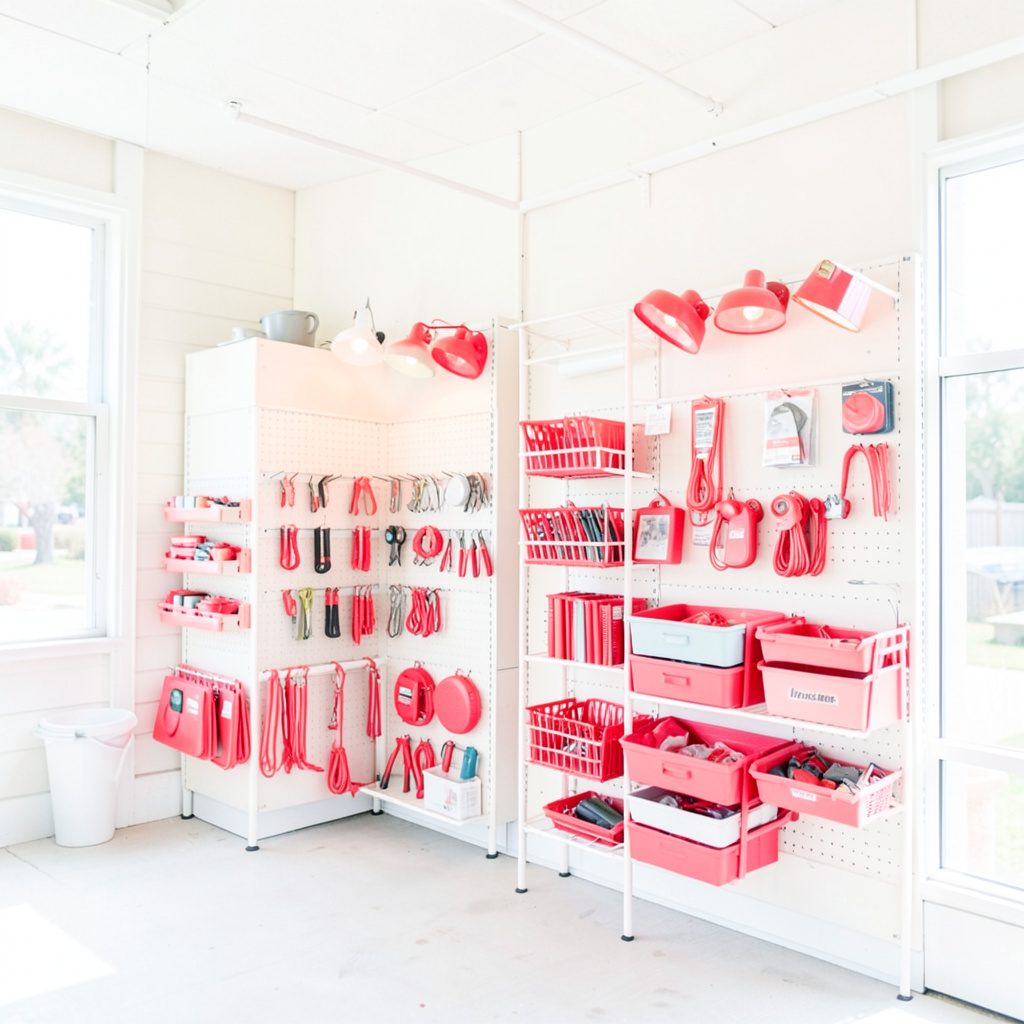
Mount the sensor near a garage corner or above the door, often around 2.5–3 metres but within the manufacturer’s limits, and aim it across the approach rather than directly toward the road. Height and lens shape matter as much as range. A garage that also stores garden equipment benefits from an orderly layout; checking garden tool clearances can stop bulky implements from obstructing walking space and sensor coverage.
Light output that serves the entry
For a close side entrance, a 300–500 lumen wall light may be enough; a wider driveway or trailer apron often benefits from 600–1,000 lumens. Judge the result at the lock and along the path at night, not by packaging claims. A 2700–3000 K output feels easy around a home, while 3500–4000 K looks cleaner in a garage and helps reveal obstacles.
Avoid bare lamps aimed at the road. Look for a diffused face, a controlled beam and a low brightness that remains visible without washing out the driver’s view. Automatic dimming should settle quickly for someone carrying shopping. If a security camera shares the area, check that its night mode can disable white-light interference.
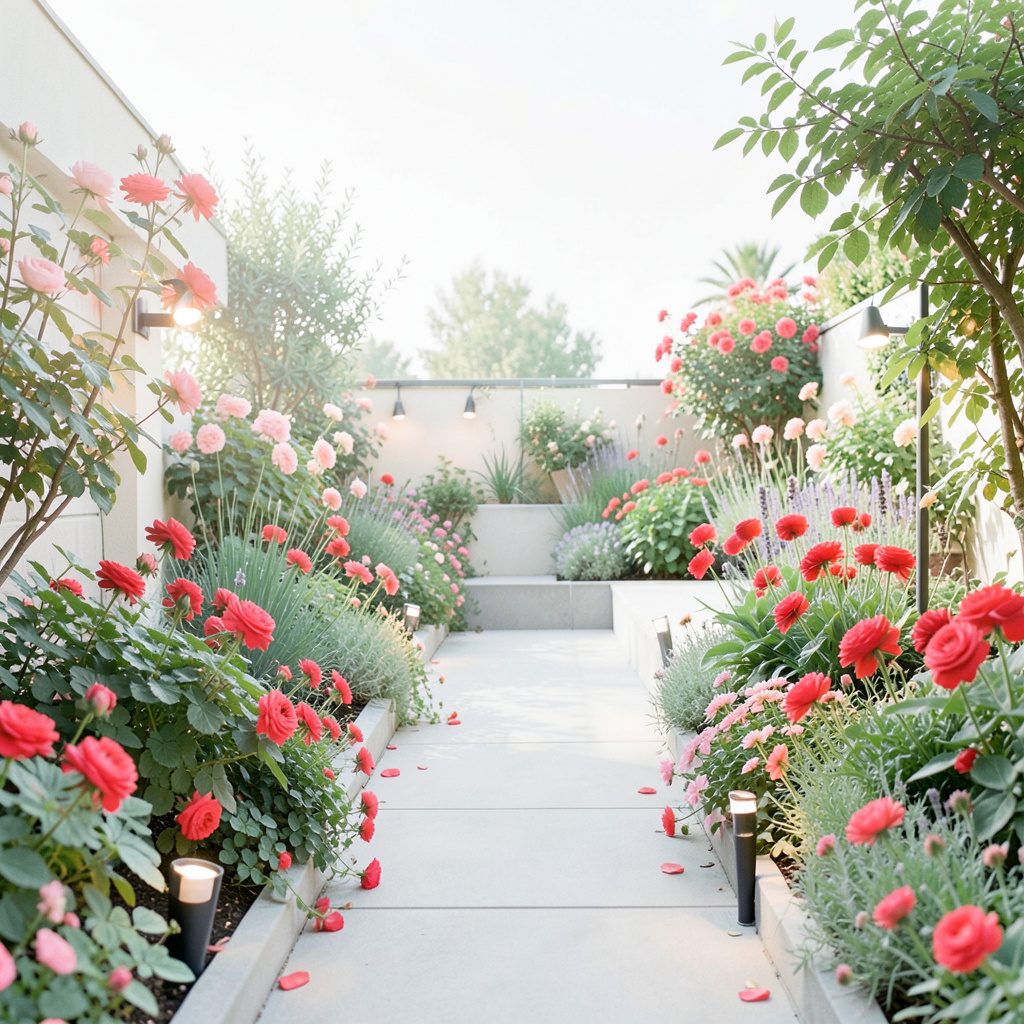
Nearby planting affects both light and detection. Leaves, pets and branches crossing the beam can repeatedly activate the fixture. Advice on landscape lighting for trees can inform a layout around an entry tree; aim the sensor below the canopy and illuminate the trunk or an architectural edge separately.
Power options for Australian conditions
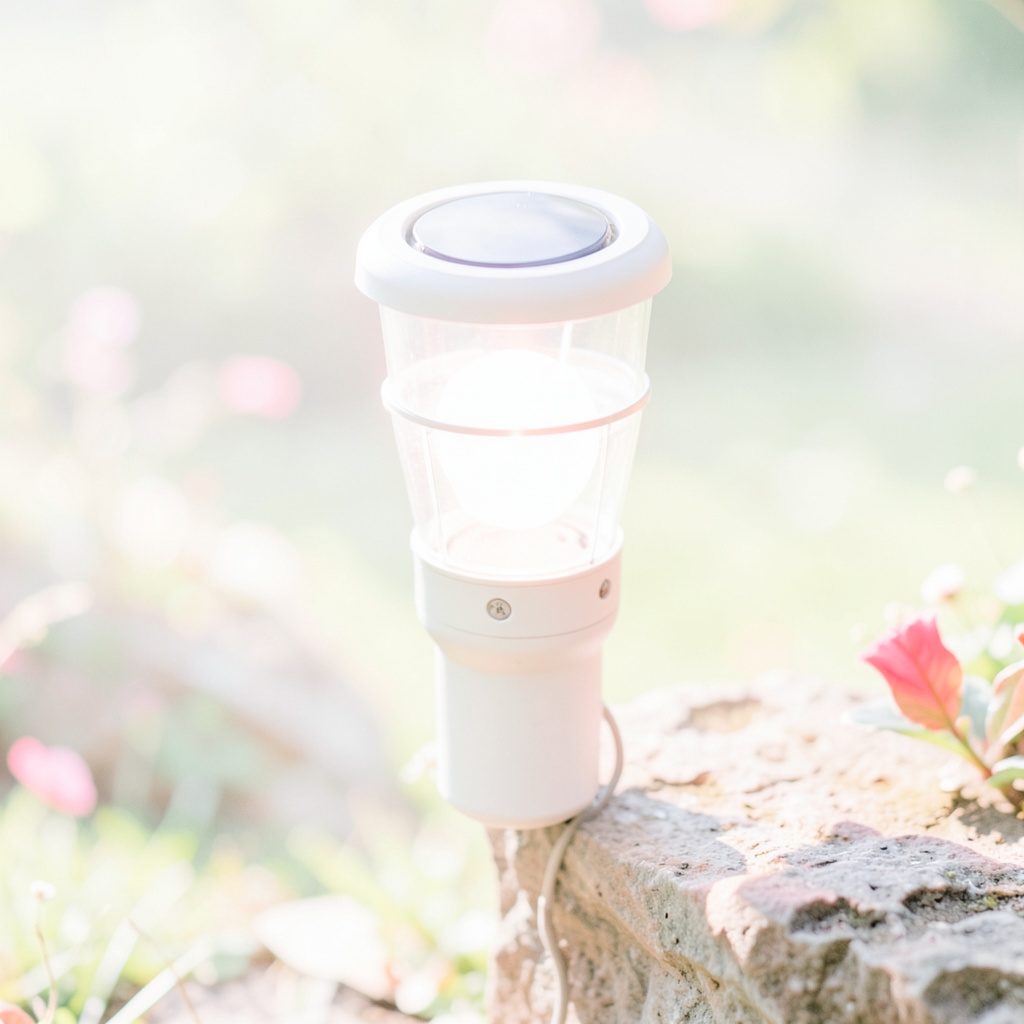
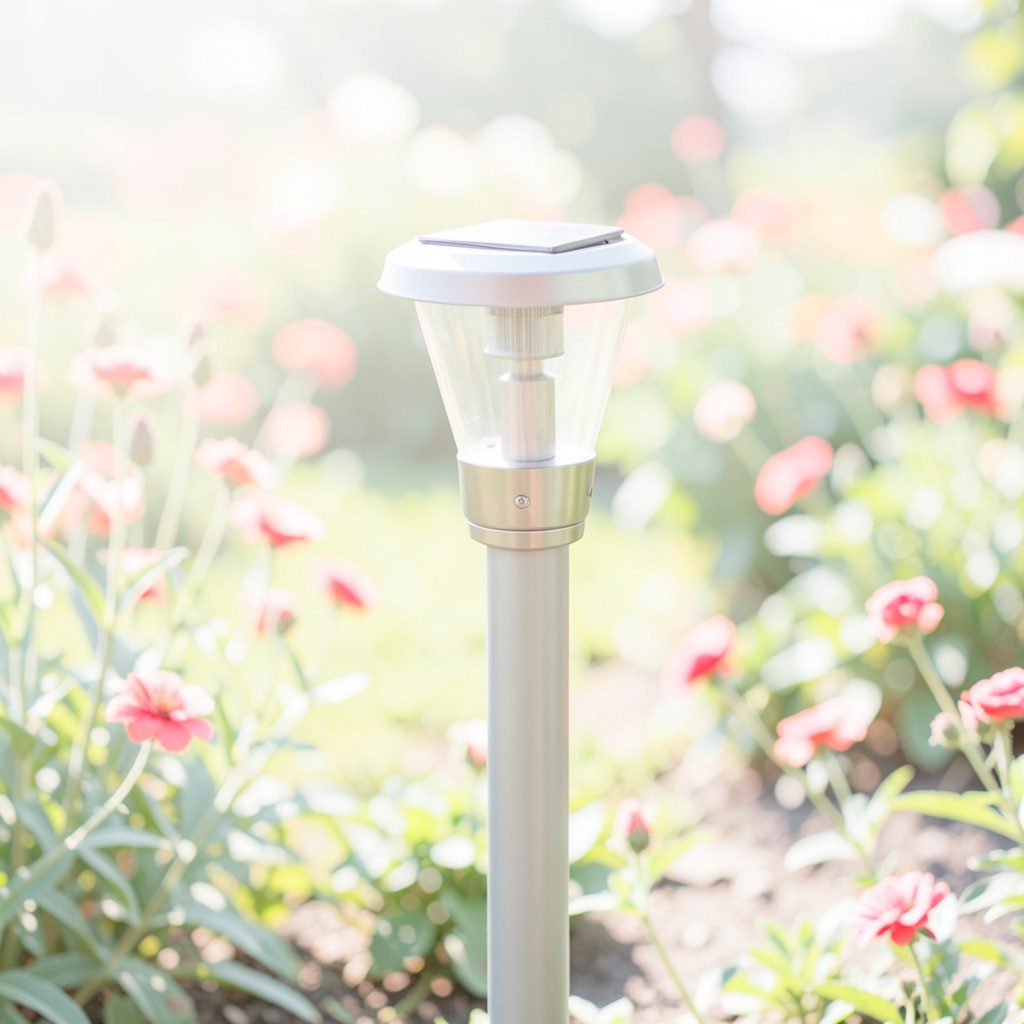
Solar lights suit a garage without accessible mains power and provide resilience during an outage, provided the panel receives several hours of direct sun. This guide to solar pathway light testing shows why placement matters. A north-facing panel may charge well in Brisbane, while a shaded wall in Melbourne can leave a fixture dim through winter.
Check panel exposure, battery replaceability, runtime and IP rating rather than relying on nominal brightness. A lamp under a soffit may last only a few nights after cloudy weather, while coastal salt and strong summer UV can shorten the life of cheaper fittings. Battery-only products are convenient for temporary testing.
Hardwired LED fittings generally give steadier output and an all-night security mode, but installation quality is decisive. A licensed electrician should apply the relevant state electricity legislation and AS/NZS 3000, checking any National Construction Code requirements that apply to the property. Circuit capacity, earthing, controls and residual current device protection should be verified rather than assumed.
Smart controls and installation
Smart lighting is useful when several household members need different schedules or a light must coordinate with a camera. This Hue outdoor lightstrip comparison separates decorative linear lighting from security floods. At an entrance, a sensor flood normally reveals the ground and lock more effectively than a lightstrip.
For a Philips Hue system, verify the outdoor lightstrip, power supply and motion sensor for compatibility, including the control method and any neutral-conductor requirements. Retain a local automatic mode because app and hub dependence can leave no welcome light after an outage. After dusk, adjust sensitivity and duration, then walk from the car to expose blind spots and nuisance flashes.
A practical buying checklist
Product labels mix technologies, so compare like with like. These categories cover most Australian garage-entry needs, although brightness and settings vary by model.
Philips Hue and other app-controlled outdoor lights are suited to zoned schedules and precise lighting scenes, provided the fitting, hub and wiring function together.
InnoGear solar lights offer convenient retrofitting where trenching or a new circuit would be costly; prioritise panel exposure, battery warranty and measured runtime.
Hardwired PIR floodlights provide steady driveway coverage, broad detection and all-night security mode, subject to qualified electrical installation.
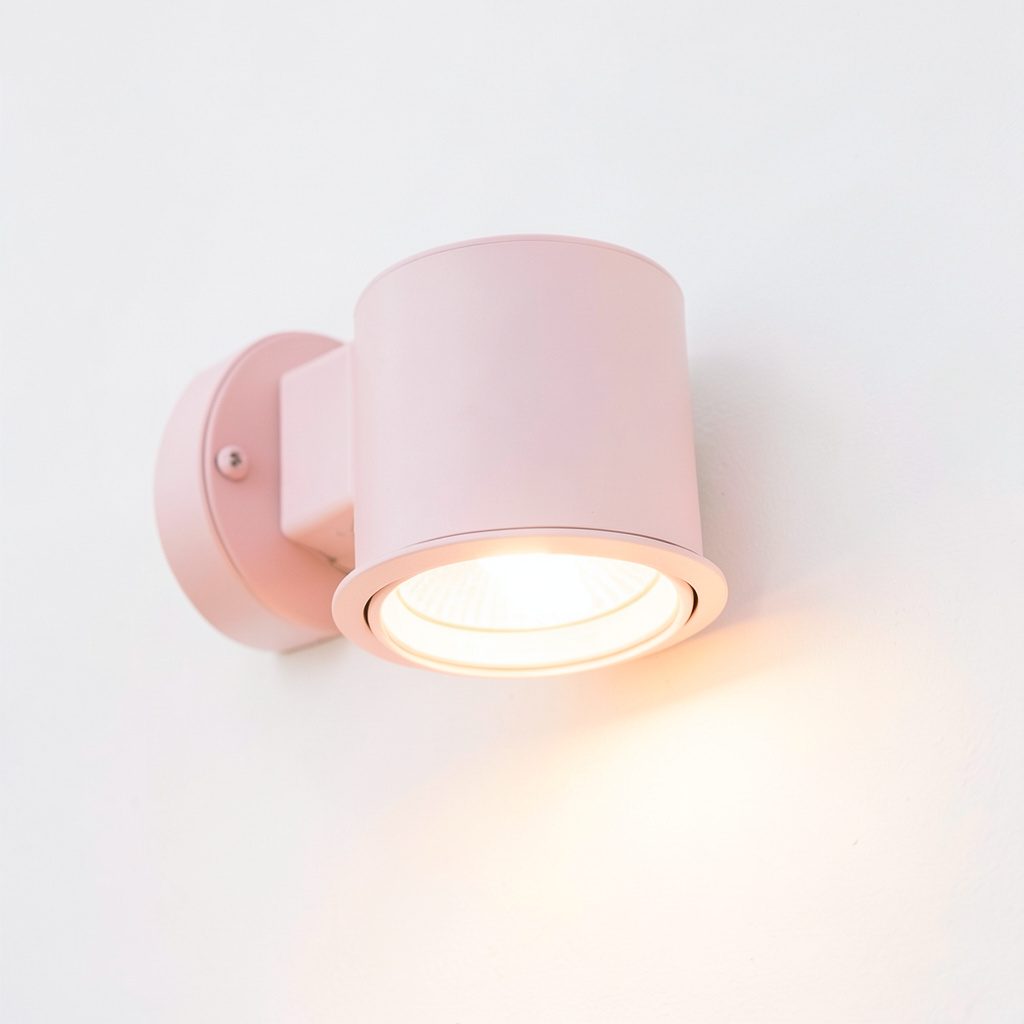
Weather-rated LED bulkheads give compact, simple illumination for close-range use over a door, side path or parked ute.
At Home Depot or Amazon.com.au, compare current Australian specifications, then confirm the chosen model on the manufacturer’s website. Marketplace listings can mix voltages, sensor variants and imported warranties. Check RCM compliance where the equipment falls within Australia’s electrical equipment safety scheme, and favour a local seller with a clear return process.
Before buying or installing, assess several practical details.
Detection requires evaluation of the field angle, range, lux threshold, adjustment options and any dusk-to-dawn mode.
Weathering evaluations must cover an appropriate IP rating, corrosion resistance, sealed joints and UV-stable materials.
Electrical safety checks demand attention to 230 V compatibility where relevant, transformer load, wiring, earthing, RCD requirements and manufacturer instructions.
Ownership planning involves checking replaceable batteries, available spare parts, warranty coverage and the intended switching schedule.
For owners who also tow machinery, entry lighting helps after dark but cannot compensate for an overloaded trailer. Review safe mower transport as a separate pre-trip routine, checking tie-downs, ramps and visibility before a zero-turn mower moves.
The strongest setup is usually a sensor flood aimed at the arrival zone, paired with a softer wall light over the door. Solar models add resilience, hardwired models add consistency, and smart models add control. The sensor should detect the approach while the beam illuminates exactly where hands and feet will be.
Remember the essentials: choose for Australian weather and local electrical rules, test detection after dark, prevent glare for drivers and neighbours, and buy from a seller with understandable support. A well-aimed, properly installed motion light makes the garage threshold clear and predictable every night.