Featured Topics
The best LED rope lights for permanent patio decor
Choosing the best LED rope lights for permanent patio decor starts with the way the space is used. Australian plans often call the covered area a verandah or alfresco: the first suits casual dinners, while the second may need brighter light around steps and seating. The slim rope follows architectural edges without taking much visual room.
Australian weather makes outdoor ratings essential. Perth brings intense ultraviolet exposure, Melbourne’s damp evenings test poorly sealed joints, and Brisbane adds humidity, heavy rain and insects. Check the cable, connectors and power supply rather than relying on a sheltered position. In the southern hemisphere, a solar panel usually performs best with a clear view towards the north.
Australian shoppers commonly compare Bunnings, Mitre 10, electrical wholesalers and Amazon.com.au. Home Depot listings can identify models and fittings, but Australian voltage, currency and warranty support still need checking. Philips is familiar for app-based colour control, while InnoGear provides many practical rope-light options across different budgets.
Permanent installation is more than hiding a temporary string under the eaves. It may involve fixed cable, a wall controller, weatherproof joints and a permanent power supply. A qualified electrician should handle mains work, particularly near pools, pergolas and wet entertaining areas. Decorative lighting should also remain separate from heavier security or outdoor-kitchen circuits.
Matching the light to the patio
Start with atmosphere, not maximum brightness. Warm white at roughly 2200–2700K flatters timber, stone and outdoor dining furniture, while tunable white lets a patio shift from dinner to late drinks. A visible rope can provide ambience; downlight or shielded fittings are better where bright task light is needed.
Before routing cable near a lawn, make the ground firm and mower access straightforward. Upgrading to rough-terrain mower wheels can reduce ruts and make uneven patches easier to manage, while keeping mower paths clear of electrical cables. Keep any low-voltage run above the route used by garden equipment.
Plan for Australian habits rather than an idealised garden photograph. In a fair few Australian homes, people move between indoor and outdoor areas throughout summer evenings, so light the doorway, verandah edge and steps as a continuous route. Avoid glare into neighbouring windows, and position most light beneath eye level where people gather.
Ratings and specifications to check
The IP rating tells you how well an enclosure resists water and dust. For an exposed eaves or pergola run, look for IP65 or higher; use IP67 where fittings may receive heavy rain or brief immersion. UV-resistant cable and silicone jackets are also valuable under strong Australian sun.
Ratings must cover the whole system. A weatherproof rope still needs a compatible transformer, sealed joints and an outdoor-rated controller. Most Australian homes use 230V power, so verify the input voltage and connector type rather than assuming an overseas adapter or the wall plug is suitable.
Before ordering, sketch the patio from above and browse outdoor lighting designs for examples of layered layouts. Mark the transformer location, cable route and dark corners, then compare products against that plan instead of choosing a reel first.
- Choose IP65 or IP67 protection for exposed outdoor positions.
- Look for UV-stabilised cable and a jacket suited to Australian sunlight.
- Confirm 230V compatibility or use a correctly rated low-voltage system.
- Match every controller and connector to the light’s environmental rating.
- Check that the warranty and replacement parts are available in Australia.
Comparing product families for real use
Philips Hue outdoor products suit people who value app control, scenes and colour changes, provided the correct outdoor controller is used. InnoGear’s rope-light range is often attractive for straightforward warm-white installation and value. In both cases, software features matter less than the cable’s weather rating and local warranty.
Solar rope lights remove the need for a cable, although panel placement determines the result. Give the panel several hours of direct sun and keep it clear of tree shade, leaves and irrigation spray. Battery models also need seasonal checks, because winter cloud can reduce charging even in cities such as Melbourne.
Broader catalogues make side-by-side checking easier; the EPI Light range provides a useful reference point for construction, brightness and connector details. The right family depends more on the patio layout and installation method than on the brand name alone.
- Best for app control: Philips Hue outdoor lightstrip products, paired with compatible controllers, offer colour scenes and scheduling.
- Best for warm-white value: an outdoor-rated InnoGear rope light is a practical choice for long, simple runs.
- Best for no-cable setup: a purpose-built solar rope with a north-facing panel removes permanent wiring.
- Best for long perimeters: commercial 220–230V rope lights suit larger runs when a qualified electrician specifies the supply.
- Best for detailed accents: 12V or 24V rope lighting is flexible and safe to adjust, but its transformer must remain dry and accessible.
Planning controls, paths and ambience
Smart control can make a permanent system easier to use, but weather protection is crucial. A comparison of outdoor smart plugs helps identify models suitable for exposed positions; many consumer plugs are intended for indoor use only. Keep sockets and adapters under cover, and use a controller specifically rated for the connected load.
Map the installation in layers before drilling or ordering cable. The following checklist keeps the layout practical:
- Trace every light run back to one accessible, dry power source and note the circuit’s load.
- Place rope along architectural lines, not random edges, to make the patio look deliberate.
- Light steps and level changes, but shield bright diodes so they do not dazzle anyone walking.
- Keep joins above likely splash zones and allow drainage around every fitting.
- Choose 2200–2700K in dining areas to reduce the attraction of mosquitoes near dark gardens.
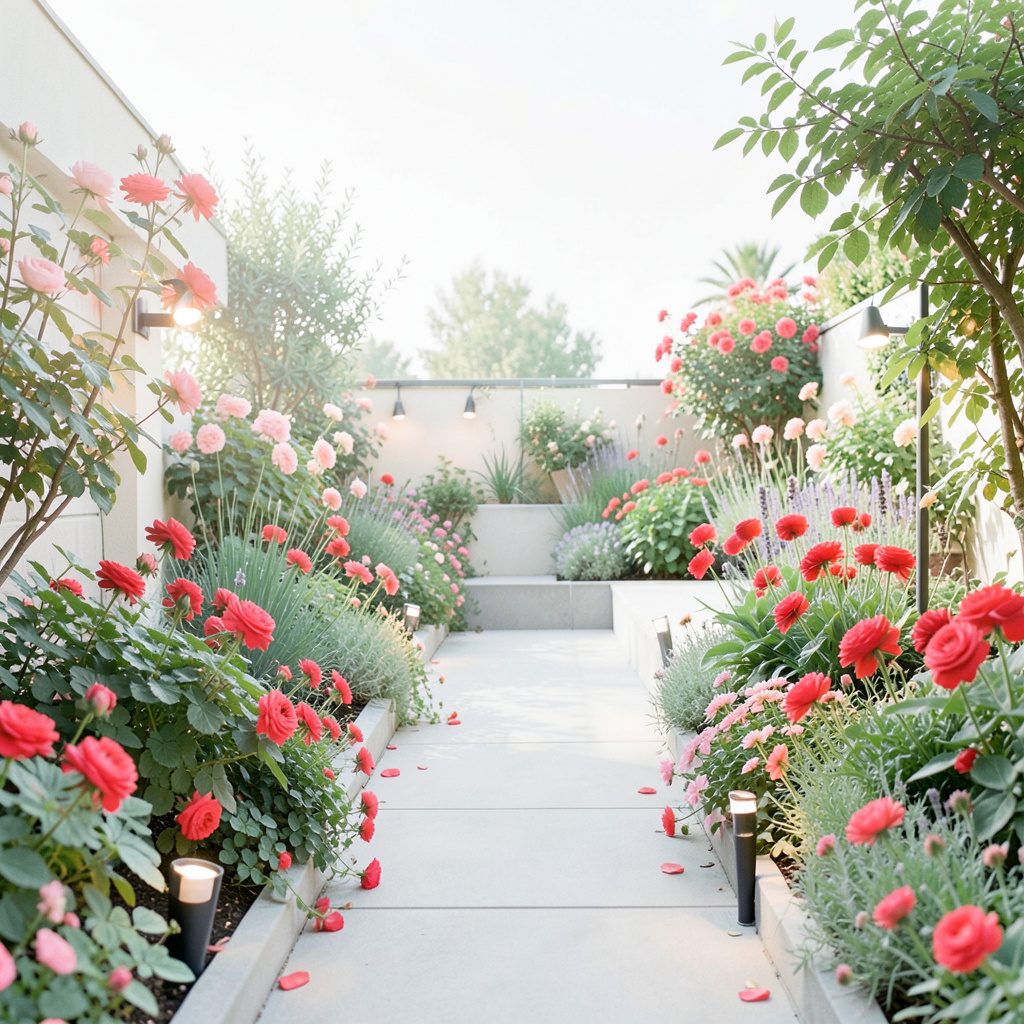
Use the same checklist for an alfresco roof, garden path or terrace wall. Keep the transformer reachable, avoid running cable where doors or furniture pinch it, and check that vegetation will not grow through the installation. This matters in Australian gardens, where vines and fast-growing foliage can hide a damaged joint within a season.
Installing for a durable permanent finish
Use mechanical fixings designed for the surface: stainless clips, rated cable ties or purpose-made channels. Outdoor-grade adhesive can work on smooth structures, but it often fails in summer heat and should not carry unsupported cable. Fit the rope loosely enough for expansion, and never pierce the cable with screws or nails.
Any new fixed wiring needs a licensed electrician to assess earthing, residual-current protection and safe cable routing. The installer should confirm the final load, the outdoor rating of every exposed component and clearances around pools. Smart features do not change these electrical obligations.
After installation, inspect seals and connectors at the start of summer and after severe weather. Clean solar panels, remove leaves from drains and replace failed sections with the correct connector rather than wrapping bare joins in tape. The most practical takeaway is to choose a UV-resistant, fully outdoor-rated rope with a compatible Australian power supply, then have permanent wiring professionally checked before it is switched on.