Featured Topics

Solar Garden Lights That Change Color: A Buying Guide
Solar garden lights that change color can make an ordinary outdoor area feel more considered, whether you want a soft glow around a patio or brighter colours for weekend entertaining. Modern models use LED bulbs, small solar panels, rechargeable batteries, and sometimes remote controls or smartphone apps to shift between warm white, cool white, and a full spectrum of colours. Learn more about Meredithlbl.com.
The best choice depends on more than the number of colours available. Australian gardens place different demands on outdoor lighting, from intense summer sun and coastal salt air to humid Queensland evenings and cool Melbourne winters. Brightness, battery performance, weather resistance, placement, and the quality of the colour modes all deserve attention before you buy.
What Colour-Changing Solar Lights Actually Do
Most colour-changing garden lights use RGB LEDs. Red, green, and blue diodes combine to create shades such as purple, turquoise, pink, orange, and blue. Some products also offer a dedicated warm-white LED, which is important if you want an attractive everyday setting rather than a permanent party effect.
Basic lights cycle through colours automatically, while better units let you pause on one shade or select a slow fade, flash, or smooth transition. Remote controls are convenient when lights are installed along a garden bed, although infrared remotes may work poorly around corners. Bluetooth or Wi-Fi models provide more control but usually cost more and consume additional power.
A product description can make “16 colours” sound impressive, yet the practical difference may be small if the light produces weak or uneven shades. Look for photographs taken at night, customer reviews mentioning colour accuracy, and details about whether white illumination is separate from the RGB setting.
Choose Colours That Suit Your Garden
Colour temperature matters just as much as colour selection. Warm white, generally around 2200K to 3000K, complements timber decking, sandstone, brick, and leafy planting. It is a good choice for pathways and seating areas because it feels relaxed without overwhelming the surrounding garden.
Cool white can suit contemporary homes, rendered walls, and silver foliage, but it may appear stark when used throughout a small yard. Blue and purple are best used as accents around feature plants, water bowls, sculptures, or entertaining zones. Red and green can look festive, though they are rarely the most flattering colours for permanent landscape lighting.
Think about the view from inside the house as well. Lights that look fun from the lawn may become distracting reflections in a living-room window. A few carefully placed colour-changing fixtures often create a better result than covering every edge with bright LEDs.
Check Performance In Australian Conditions
Australia’s strong ultraviolet exposure can fade plastic housings and make cheaper cables brittle. Search for UV-resistant materials, sealed battery compartments, and a stated ingress protection rating. An IP65 rating is a useful baseline for many garden locations because it indicates protection from dust and water jets, though lights should still be positioned so water does not pool around them.
Coastal homes near Sydney, Perth, Adelaide, or the Gold Coast need extra care with salt-laden air. Stainless steel, powder-coated aluminium, or robust ABS plastic can last longer than thin painted metal. Wipe exposed panels and fittings occasionally to remove salt and dust, particularly if the lights sit close to the beach.
In Brisbane and tropical parts of Queensland, humidity and summer storms can expose weak seals quickly. In Melbourne or Tasmania, shorter winter days may leave the battery undercharged for several nights. A removable battery and replaceable parts are valuable features when seasonal performance matters.
Understand Solar Charging And Runtime
A solar light needs direct sunlight on its panel, not simply an outdoor position. A fixture beneath a pergola, dense tree canopy, or verandah may receive too little energy to operate reliably after sunset. South-facing placement can also reduce winter charging in Australia, while a north-facing panel generally receives stronger exposure, provided nearby structures do not shade it.
Runtime claims are usually based on a full charge and a lower brightness setting. Six to ten hours may be realistic in midsummer, but cloudy weather and short winter days can reduce that figure. Larger panels and higher-capacity lithium-ion batteries tend to perform better than very small units with basic nickel-metal hydride cells.
Clean the panel with a soft damp cloth when dust, pollen, or bird marks build up. Garden maintenance affects lighting more than many buyers expect; even seasonal tasks such as learning how to keep mower fuel fresh can help keep the whole outdoor area ready for use.
Compare Construction, Controls, And Safety
A sturdy spike should push into soil without bending, while a wall-mounted or hanging light needs a reliable bracket and suitable fixings. Avoid forcing thin plastic stakes into hard clay or compacted ground. Loosen the soil first, and keep the solar panel clear of mulch, leaves, and fast-growing plants.
Motion sensors can combine decorative colour with useful security lighting, but they are not a substitute for a dedicated floodlight. A soft colour-changing lantern is suitable near a path or entertaining area; entrances, side gates, and garages need consistent white light that helps people identify steps and obstacles.
If you are comparing Philips products with inexpensive InnoGear-style decorative sets, examine the warranty, battery access, replacement availability, and instructions rather than relying on appearance alone. A useful reference for understanding how LED colour and warmth affect a room or outdoor setting is this Philips WarmGlow comparison.
Features Worth Comparing
Start with the specifications that affect everyday use. Retail listings on Amazon Australia, Bunnings, and Mitre 10 can vary considerably in how clearly they describe battery capacity and weather protection.
- Separate warm-white mode for practical everyday lighting
- Replaceable rechargeable battery
- Adjustable brightness and colour selection
- IP65 or higher weather resistance
- Solar panel that can tilt towards direct sunlight
Then consider the way the lights will be controlled. A remote is handy for occasional changes, while app-based systems are better for programmed scenes across several fixtures. If the lights will be used around young children or pets, avoid fragile glass housings and sharp metal edges.
- Auto-on sensor from dusk to dawn
- Memory function that retains the chosen colour
- Timer settings for late-night shut-off
- Secure ground stakes or mounting brackets
- Manual off switch for storage or cloudy periods
Plan Placement For A Balanced Effect
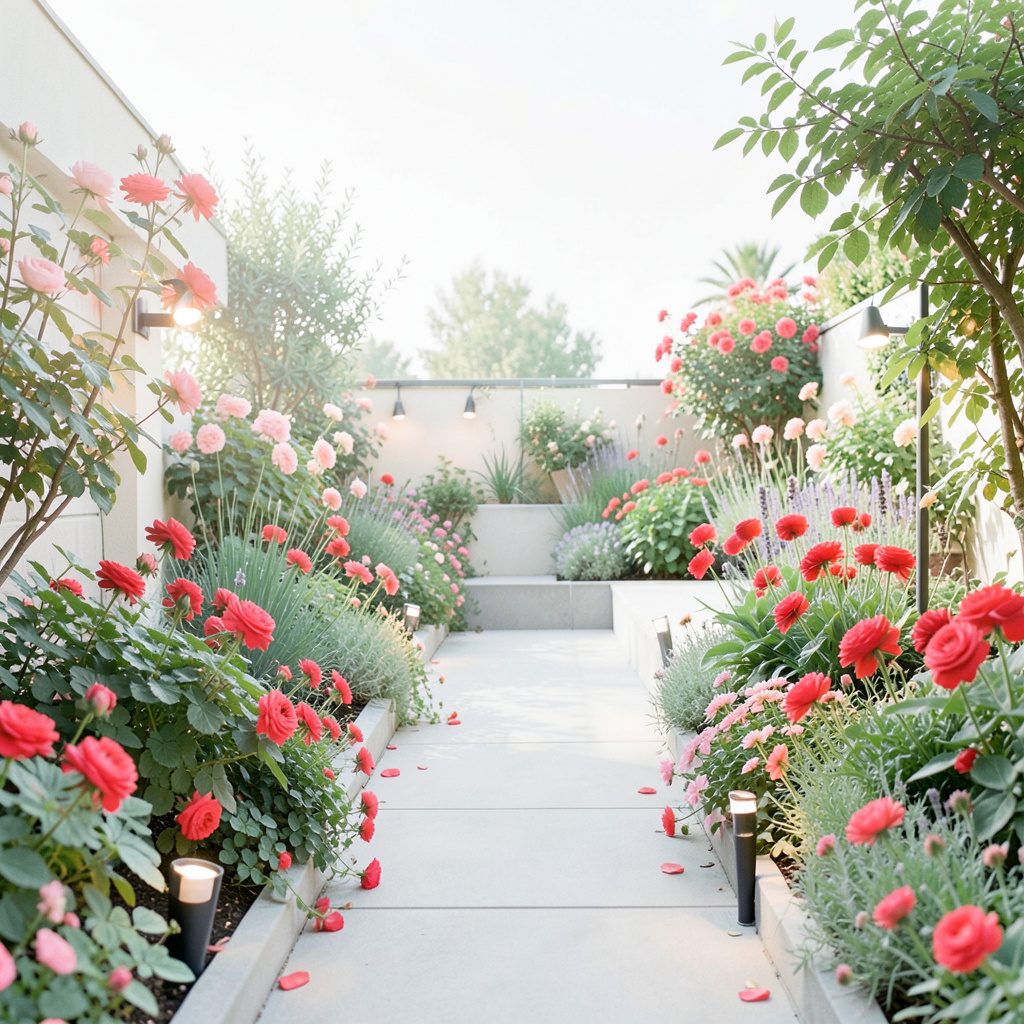
Use colour-changing fixtures to draw attention to a few areas rather than flooding the entire garden. Two or three lights aimed at a feature tree can provide depth, while low-level path lights should remain restrained so they do not create glare. Spacing fixtures unevenly often looks more natural than placing them at mathematically exact intervals.
For patios and terraces, hanging lanterns or compact table lights can define a seating zone without competing with ceiling lights. Around lawns, place fixtures where they will not interfere with mowing, children’s play, or foot traffic. Keep cables, detachable panels, and battery compartments above areas that regularly become waterlogged.
A simple test is to install one light, view it from the house, and check the effect after dark. Blue or purple light may work beautifully behind foliage but feel cold beside a dining table. Warm white is usually the safer foundation, with saturated colour reserved for plants, borders, and special occasions.
Buy For Reliability As Well As Atmosphere
Prices range from low-cost multipacks to premium individual fixtures with stronger panels, better batteries, and more consistent colour output. A cheap set can be perfectly suitable for a temporary display, but replacing several failed units each season may cost more than buying a durable product initially.
Read reviews for evidence of long-term use rather than focusing only on unboxing photographs. Look for comments about charging after winter, water entering the housing, fading plastics, loose stakes, and whether the remote still works after several months. Australian buyers should also check delivery times, warranty handling, and whether replacement batteries are available locally.
The most successful installation combines practical illumination with controlled colour. Choose warm white for paths and daily use, reserve vivid shades for focal points, and match the hardware to the weather your garden actually receives. The key thing to remember is that reliable charging, weather-resistant construction, and well-placed light matter more than having the largest colour list.