Featured Topics

LED step lights for concrete stairs: safer steps
Concrete stairs can look harmless in daylight and become surprisingly difficult to navigate after dusk. Low-profile LED step lights create clear visual cues without the bulk of brighter garden uplights, helping people judge the height and position of each tread. They are especially useful beside pools, on split-level decks and along paths that connect a house to a garden gate.
Good stair lighting depends on more than adding a few bright spots. Fixture placement, glare control, corrosion resistance and correct wiring all affect whether the result feels safe and comfortable. Australian conditions also matter, from salty coastal air and intense summer UV to wet winters and bushfire-prone gardens. The aim is a steady rhythm of light that reveals the stairs without turning them into a runway.
Plan the lighting before choosing fixtures
Start by walking up and down the stairs in the dark, preferably with someone else, and note where the surface disappears or the next tread becomes unclear. Pay particular attention to the top and bottom landings, changes in direction and any risers shadowed by handrails. Bright light is not always the answer; a small change in spacing or aiming can remove a dangerous dark patch.
Each fitting should reveal a tread, riser or handrail rather than shine directly into an approaching user’s eyes. Downward-facing lights can wash the stair surface, while side-mounted fixtures can create useful contrast on the riser. On a wide set of stairs, lighting on both sides usually gives more even coverage. On a narrow flight, carefully placed lights on one side may be sufficient if their beams overlap.
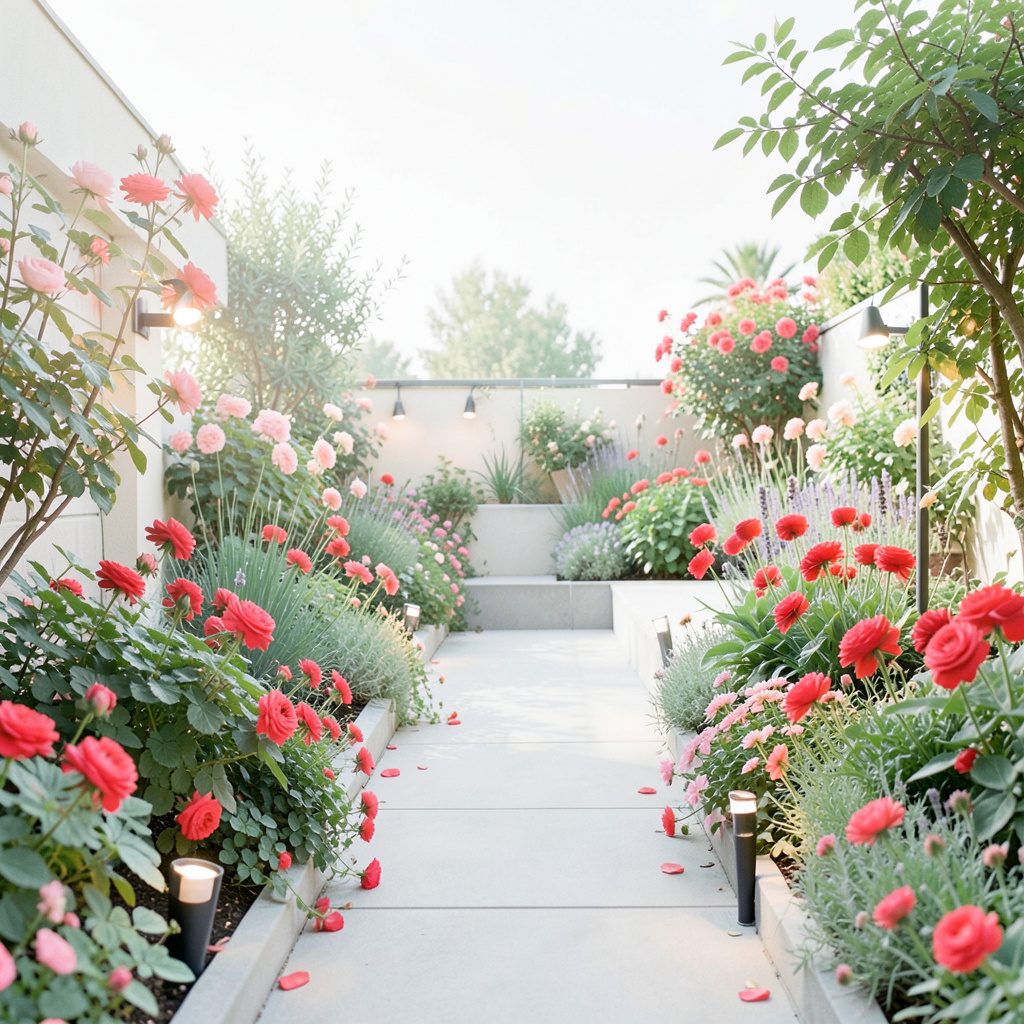
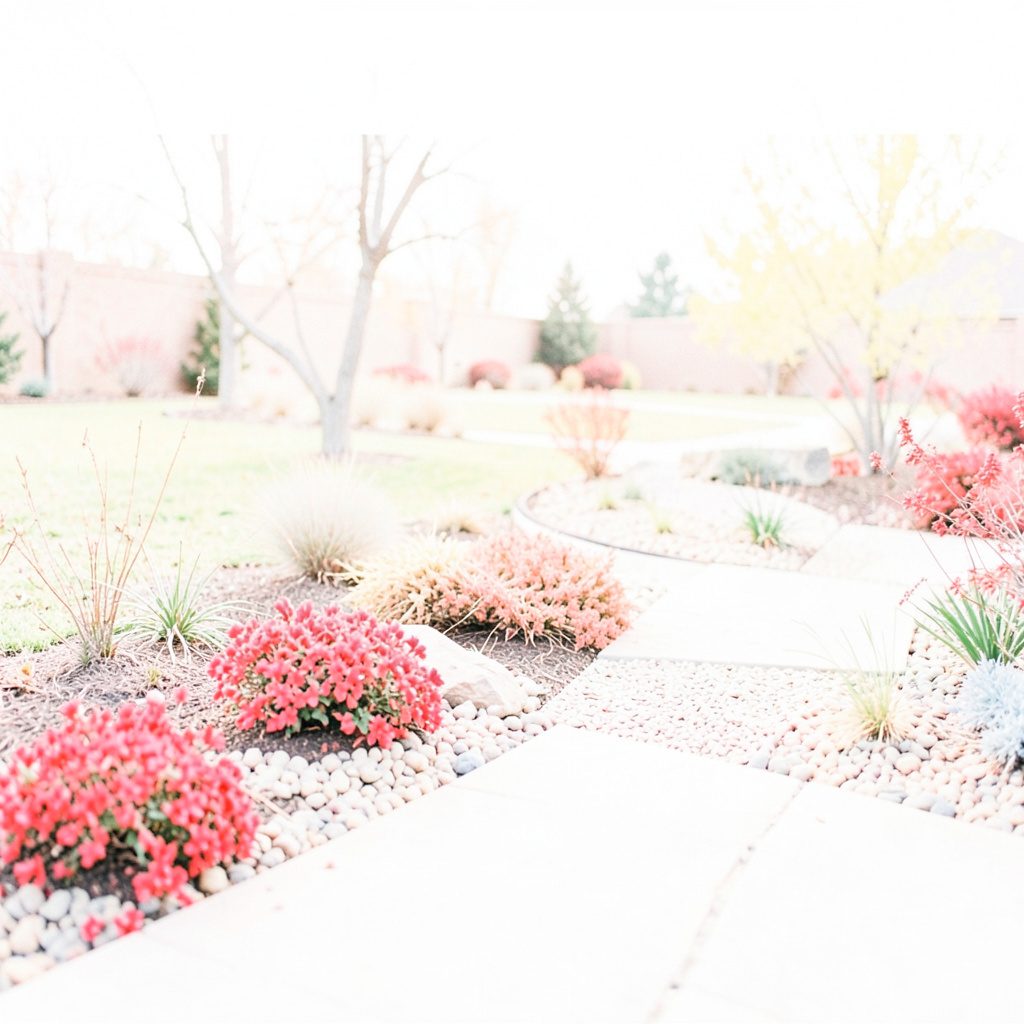
The overall design should connect with the wider garden rather than feel like a separate installation. Rock garden lighting ideas can help with visual consistency around nearby boulders and planted borders. For another perspective, this outdoor lighting project shows how low-level lighting can define a path while preserving a calm atmosphere after dark.
Build for Australian outdoor conditions
Outdoor fittings on concrete stairs need more weather protection than a decorative indoor light. Look for an IP65 or IP67 rating, sealed cable entries and a lens that will not yellow or crack under UV exposure. Powder-coated aluminium and UV-resistant polycarbonate are useful choices, while stainless steel components provide added strength. In coastal areas around Sydney or the Gold Coast, 316-grade stainless steel is a safer bet than 304-grade because it resists salt corrosion better.
Different Australian cities create different challenges. Melbourne’s damp winters can leave fixtures and concrete joints wet for extended periods, making sealed grommets and reliable drainage important. Strong sun in Brisbane and Perth can degrade rubber seals, adhesives and plastic lenses, so outdoor-rated materials should be checked carefully. Gardens in regional bushfire zones also need a sensible approach to ember exposure, including regular housekeeping around nearby vegetation.
Solar and battery-powered fittings can reduce cabling, but they need an honest assessment of the site. A panel on a shaded southern side of a house may perform poorly even if the stairs receive plenty of light. Mains-powered LED fittings are generally more consistent for critical stairs, provided they are installed and protected correctly. Australia’s 230–240V supply and local wiring rules mean an electrician should handle hardwired connections rather than a weekend installation.
Get the beam and colour right
Lumens are useful for comparing brightness, but beam spread and glare tell a more complete story. A tightly focused fitting may leave large areas of the concrete dark, while an overly broad beam can spill into neighbouring windows. Choose a beam that overlaps the next light pool and clearly defines the walking route. A shielded or recessed face is preferable to exposed LEDs at eye level.
Warm white light around 2700–3000K generally suits Australian outdoor spaces because it feels comfortable beside timber, brick and established planting. Cooler white can make steps look sharper, although it may create a harsher contrast against a dim garden. Pay attention to the colour rendering index as well: a higher CRI helps the true colour and texture of the concrete remain visible.
Brands such as Philips and InnoGear offer different approaches, from connected lighting to solar and portable outdoor models. Product availability varies between Amazon.com.au, Bunnings, Mitre 10 and Home Depot’s online catalogue, so compare the Australian specifications rather than relying on an overseas listing. In particular, check input voltage, plug or transformer requirements, warranty coverage and whether replacement parts are sold locally.
For nearby walls, gates or larger trees, Meredith LBL’s comparison of the best LED floodlights can provide useful context. Floodlights can support a stair route, but they should support the low-level step pattern rather than overwhelm it or point across the treads.
Install without damaging concrete
Concrete work is rarely as straightforward as it appears. Reinforcement, moisture and hidden conduits may sit beneath the surface, and drilling into the wrong area can cause cracking or create an electrical hazard. A qualified electrician should locate services, assess the substrate and install any concealed wiring. Mains lighting should be connected in accordance with Australian wiring requirements and protected by an appropriate RCD, often called a safety switch.
Surface-mounted fittings can reduce the amount of drilling, but they still need a sound fixing method. Expansion joints should not be bridged, and the housing must sit flat enough to avoid creating a trip edge. Avoid relying on adhesive alone on rough or porous concrete. If a recessed fitting is selected, the recess should be properly sealed and installed without compromising the waterproof enclosure.
Controls can improve convenience without making the stairs inconsistent. A photocell provides dusk-to-dawn operation, while a well-positioned motion sensor can illuminate the route only when it is needed. Motion sensors must cover the approach rather than the landing alone, and their sensitivity should be adjusted so passing foliage does not repeatedly switch the lights on. A manual override is useful for testing and during power outages.
A practical fixture checklist
Before ordering, compare the specification, installation method and after-dark performance rather than focusing on the brightest number in the listing.
- Choose an IP65 or IP67 outdoor fixture with UV-resistant seals and corrosion-resistant fixings.
- Select a low-profile housing that will not create an obvious ledge on the walking surface.
- Look for a downward or side-shielded beam with enough overlap to reveal each tread and riser.
- Confirm 230–240V compatibility, Australian warranty support and any required certification before purchase.
- Choose a consistent warm or neutral colour temperature across every fitting in the stair run.
- Consider photocell, motion-sensing and manual override functions, but ensure automatic control cannot leave the stairs unlit.
A sensible product comparison should include both the fitting and its accessories. Check whether connectors, mounting brackets, screws and replacement lenses are available separately, since sealed units can be difficult to service. It is also worth noting the product information published in Meredith’s author profile, which can help readers understand the editorial approach behind the recommendations.
Once installed, test the route from several directions rather than from only the bottom of the stairs. Someone should approach from the landing, walk down and view the fittings from both sides. This catches glare, dark gaps and uneven spacing that may not be apparent while standing at the installation point.
Make every landing a safer choice
Step lights need occasional maintenance, particularly in coastal and dusty locations. Salt, pollen and fine concrete dust can reduce light output, so lenses should be cleaned with a damp cloth and the surrounding area kept clear of leaves. Check that sensor lenses remain unobstructed and that cable entries show no cracking or moisture. Solar models also need their panels clean and their batteries checked according to the manufacturer’s guidance.
The best system is one that family members can use without thinking about it. Light should begin early enough to show the complete route, remain steady while someone is on the stairs and avoid sudden changes that temporarily conceal a step. Red or amber night markers may be suitable for very low-level guidance, but the main path still needs enough illumination to judge depth and distance.
The practical takeaway is simple: prioritise even, shielded light and secure installation over raw brightness. A carefully planned row of durable LED step lights turns concrete stairs into a clearly defined route while fitting naturally into the garden after dark.