Featured Topics

LED floodlights with adjustable beam angle: best uses
LED floodlights with adjustable beam angle let homeowners control both the reach and direction of outdoor light. Instead of relying on one fixed spread, these fittings can highlight a path, wash across a terrace, illuminate a garden bed or cover a driveway. The result is more precise lighting with fewer fittings and less glare spilling toward neighbours.
Compact urban gardens make this flexibility especially useful in Australia. A narrow Sydney or Melbourne block may contain a deck, a path, a lawn and a side gate within a few metres, yet each area needs a different amount of illumination. Adjustable optics and sensor controls help match the output to the task while keeping energy consumption and light trespass under control.
When comparing options, look beyond wattage and check the beam spread, useful lumen output, colour temperature, ingress protection and sensor range. Current outdoor ranges from brands such as Philips and InnoGear offer different combinations of those features, so product descriptions and installation conditions matter more than brand name alone.
What adjustable beam control actually changes
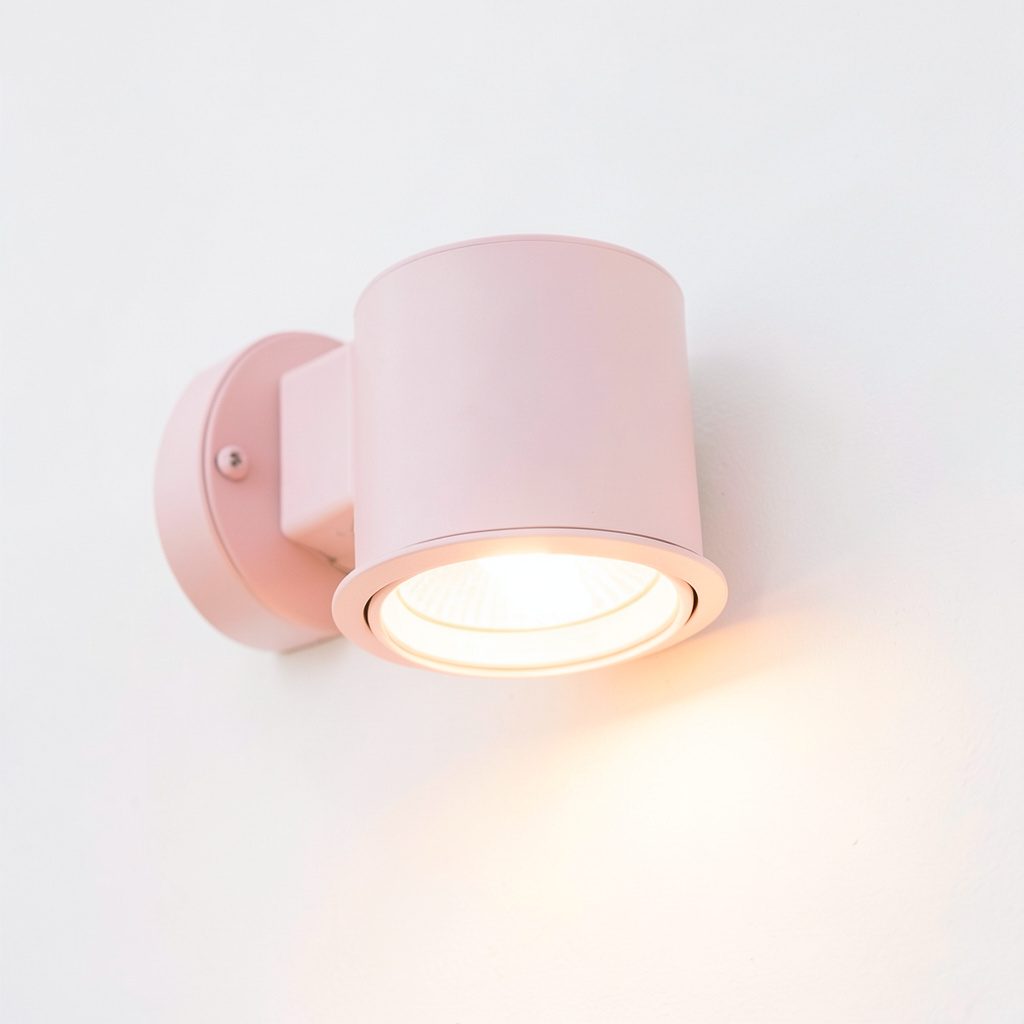
Mounting adjustment and beam adjustment are related but distinct. A rotating bracket changes where the fitting points, while a selectable lens or optical zoom changes the width of the illuminated area. Some lights provide both, allowing a wide flood to cover a driveway before being narrowed into an accent beam for a tree.
A terrace demonstrates why precision matters. On a covered outdoor dining area in Brisbane or Perth, a broad beam directed down across the floor can provide comfortable illumination without sending rays into nearby windows. A terrace lighting guide offers useful context for layering wall washing, floor coverage and feature lighting rather than relying on one powerful fitting.
Narrow beams are best reserved for objects such as sculptural plants, doorways and architectural features. Wider floods suit larger surfaces, but their edges should remain within the garden. This is particularly important where gardens sit close to a footpath, neighbouring property or a bedroom window.
Best-use matches and features to compare
The right beam depends on the shape of the space, the distance from the fitting and the amount of light required after dusk. Floodlights are most valuable when their coverage solves a specific problem rather than simply adding brightness to the whole garden.
Garden and outdoor-use matches
- Paths and driveways: Use a medium-to-wide flood to create an even route, angling the beam downward to reduce visible hotspots and reflections.
- Decks and terraces: Choose a downward wash or broad flood, then position the lens to avoid windows, adjacent walls and the eyes of people seated at the table.
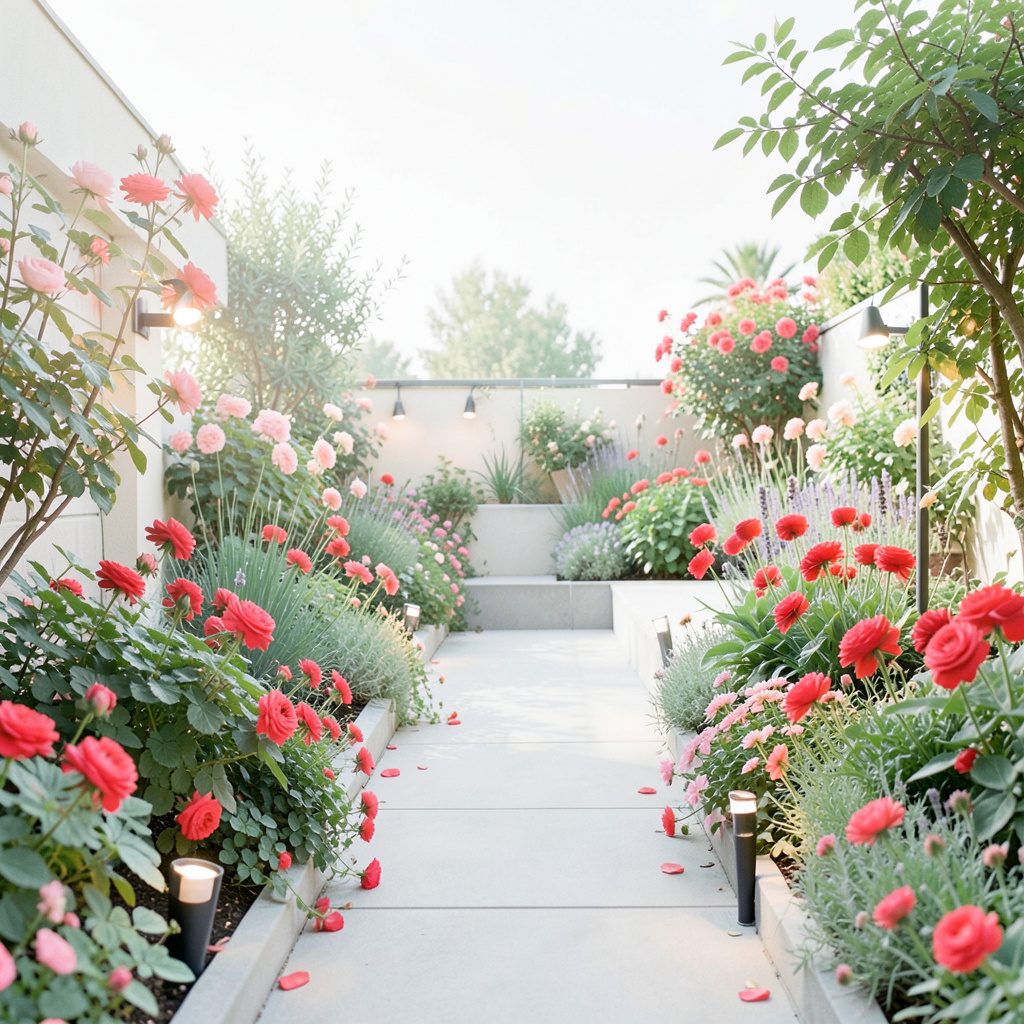
- Lawns and garden beds: Combine narrow accent beams for trees with restrained downward lighting for beds; excessive output can flatten colours and disturb the garden’s atmosphere.
- Entrances and side gates: A wide flood with a PIR sensor can provide convenient security lighting, provided the detection pattern covers the approach without lighting the whole street.
Specification checklist
- Optical performance: Compare usable lumens, beam options and lux at the intended distance rather than assuming a higher wattage always produces better illumination.
- Light quality: Warm white around 2700–3000K suits most entertaining areas, while a neutral tone near 3500–4000K can support visibility around entrances and paths.
- Weather resistance: Look for at least IP65 for exposed fittings, with IP67 or a marine-grade option where spray, pooling or coastal salt are concerns.
- Controls: PIR, dusk-to-dawn, timers and dimming can prevent unnecessary operation; integrated solar units offer flexibility where mains cable would be inconvenient.
- Installation hardware: Check the bracket range, cable entry, theft resistance and the availability of replacement lamps or batteries.
For broader placement ideas, landscape design ideas can help establish where light is needed before choosing a fitting. A sensible layout usually starts with movement routes, then adds focal accents, with security lighting layered in last.
Australian installation and buying conditions
Australian conditions place a premium on robust, correctly certified equipment. Melbourne’s wet winters, Sydney’s coastal humidity and Brisbane’s intense summer heat can all shorten the life of poorly sealed fittings. UV-stable plastics, effective heat sinks and corrosion-resistant fixings are worth checking, especially for lights mounted in full sun.
Mains-powered equipment operates at 230 volts and should be installed to Australian electrical safety requirements. Residual current protection, suitable cable routing and a licensed electrician are essential for many installations. A weatherproof rating does not make an unsafe cable joint acceptable, and products sold for the Australian market should display the appropriate compliance markings.
Shopping locally makes comparison easier. Amazon Australia, Bunnings and established lighting trade suppliers provide different pricing, delivery and warranty arrangements, while overseas Amazon or Home Depot listings may not stock suitable 230-volt versions. Comparing the product photograph against visual inspiration galleries can also reveal how a finish looks in a complete setting rather than under showroom lighting.
Protecting turf, neighbours and the night sky
Adjustable beams reduce the need for excess brightness. Instead of covering an entire property, aim separate beams across a path, porch and garden feature. This reduces direct glare, limits light trespass and preserves dark areas that may be important for local wildlife.
Lawn care deserves attention during hot weather, particularly when mower settings or cutting schedules are being changed. Guidance on lawn mower scalding explains how stressed turf can brown after mowing. Floodlights do not usually damage grass, but low-mounted fittings can be struck by equipment or create uncomfortable glare while people work outside.
Timers, motion sensors and lower output after midnight offer practical ways to reduce disturbance. Some Australian councils also regulate spill near roads, waterways or residential boundaries. Warm colour, shielded fittings and carefully aimed beams are generally kinder to neighbours, insects and nocturnal animals than unrestricted cool-white floodlighting.
From daylight plan to dusk check
Begin by identifying the areas that remain difficult to use after dark and the surfaces that need clear definition. Test one fitting at a time, adjusting both its aim and beam spread from a normal viewing position rather than standing directly below it. Include neighbours’ sightlines in the check, particularly for bright fixtures near fences and windows.
The concrete next step is to photograph the intended area at dusk, mark the three problem spots and record the required beam setting beside each mark before buying.