Featured Topics
Best solar spinner lights for whimsical garden decor
Solar spinner lights turn a lawn into a kinetic display after dusk. Ribbed vanes catch a breeze, while an LED casts shifting patterns over grass, paving and shrubs. Visible movement creates a playful focal point without a mains cable, and the ornament remains engaging in daylight.
Australian yards suit this kind of ornament. A courtyard in Melbourne, a suburban lawn in Adelaide, a balcony in Brisbane or a coastal garden in Perth brings different sun, wind and rainfall. The best-performing choice has a panel, battery and mounting system suited to the location, not merely the most attractive product photograph.
Shopping for the best solar spinner lights can feel deceptively simple. Some turn rapidly and throw crisp shadows, while others rotate slowly or favour a longer glow. Turbine, hanging pinwheel and stake-mounted windmill shapes also behave differently, so visual appeal should be balanced against stability, runtime and how each product looks by day.
This comparison focuses on outdoor features and highlights options for several garden types. It also considers companion lighting from Philips and InnoGear and Australian marketplace availability. Rather than naming one universal winner, it helps you select a kinetic ornament that looks convincing by day and works reliably after sunset.
Moving light brings gardens to life
A wind-driven ornament adds life without filling the garden with fixed hardware. As the vanes rotate, reflected light slips across nearby surfaces, making the display change throughout the evening. That movement is especially effective beside a pale wall, where shadows become part of the decoration rather than appearing as random glare.
Outdoor rooms and lawns benefit because the spinner can become a subtle centrepiece during long Australian evenings. It works near a barbecue, outdoor dining area or planted border without competing with conversation. Place it where people can see the silhouette but do not brush against the vanes as the air moves them.
Movement also helps the light feel gentle. A slow pinwheel is calmer than a fast turbine, while a compact spinner can brighten a path edge or the base of a feature plant. Choose the speed and scale to match the setting; larger moving pieces need more clearance and a more secure foundation.
What separates a good spinner from a novelty
A dependable solar spinner collects sunlight, stores energy, powers an LED and converts wind into rotation. Keep the panel clear of shadow from the rotor or nearby foliage. Look for charging guidance, an automatic dusk sensor and enough stored power for the darkest part of your night.
Runtime claims need realistic interpretation. A quoted six to ten hours may assume full sun and low brightness, while motion reduces it. For decorative evening use, appearance may matter more than all-night performance, but check how quickly the battery fades over several nights.
Weather resistance is the decisive test. Look for a stated IP rating, sealed cable entries and UV-stable finishes rather than a vague claim of being waterproof. In coastal areas, salt-laden air and blowing sand can damage poor fittings, while a narrow stake or lightweight mast may lean in a sudden gust.
Matching spinners to Australian outdoor spaces
For an open lawn, a stake-mounted pinwheel gives the clearest movement against the sky. It suits a curved garden border, a newly planted tree or a patch beside a path. Leave room around the rotor, and push the stake firmly into the soil so the body cannot tilt as the wind changes direction.
On a patio or balcony, a hanging turbine creates a moving ceiling of light without taking floor space. Check the drop line and clearance from doors, ceiling fans and overhead lights. A panel on a nearby hook or railing may charge better than one above the rotor, which can shade it.
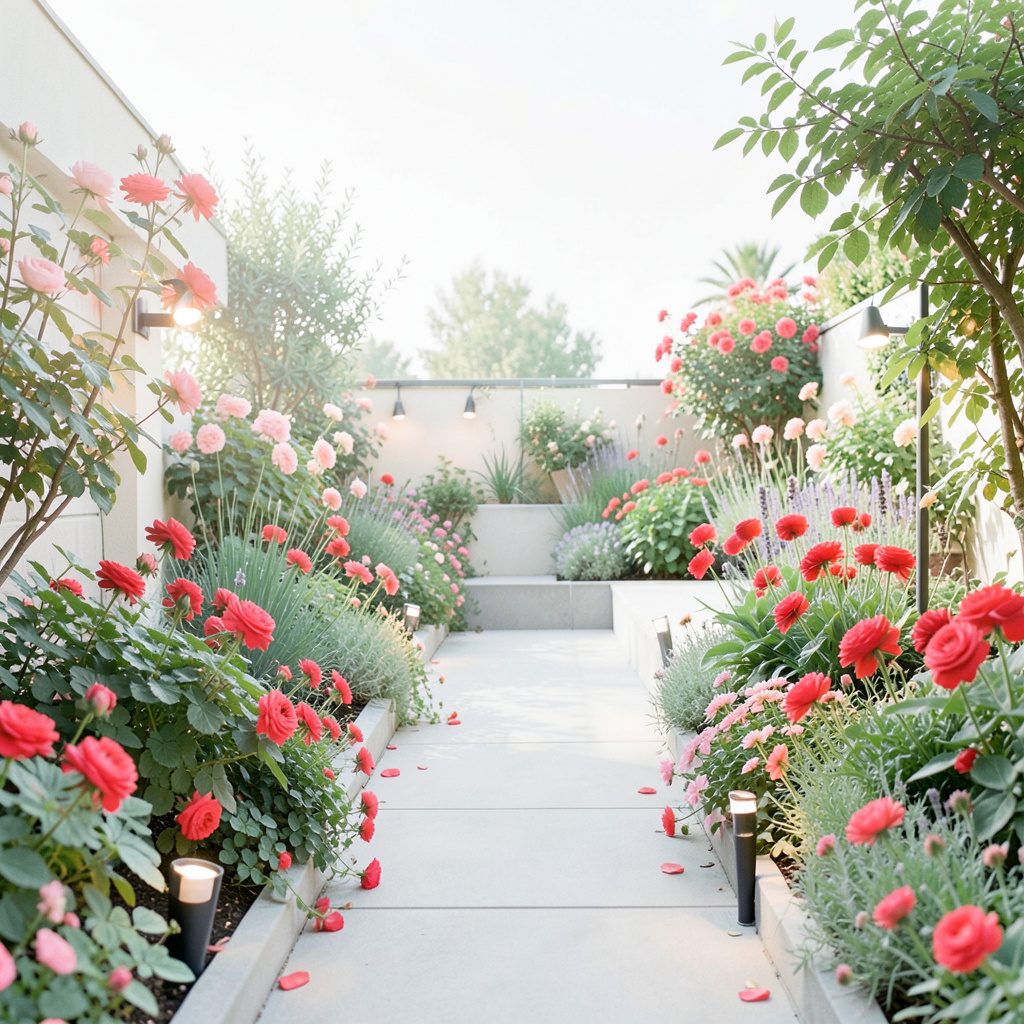
Along a path, a small spinner can mark a turn or highlight one sculptural plant rather than light the entire route. If steady guidance is needed, this LED bollard guide explains a more architectural option. Pairing a restrained path light with a larger kinetic ornament keeps the garden safe without flattening the playful effect.
Brands and buying options worth checking
Kinetic pinwheels come from specialist lighting sellers and broad marketplaces. Search terms such as solar wind spinner light, solar pinwheel stake and solar wind turbine light reveal the main formats. Compare the photographed diameter with the garden’s scale, because a small product can disappear on a large lawn while an oversized rotor dominates its surroundings.
Philips and InnoGear offer broader outdoor ranges, including solar spotlights and path lights that can support a spinner display. Their catalogues are useful for matching light colour and hardware. A spinning model may come from a smaller brand, so coordination comes through colour temperature and brightness rather than a shared app.
Amazon.com.au is convenient for comparing designs, while Bunnings and local garden centres let you inspect fittings in person. Home Depot listings can be a design and price reference, but do not assume they ship to or are serviced in Australia. Check local warranties and seller support before ordering, and review each retailer’s privacy practices before sharing personal details; this site’s privacy practices page explains the approach used here.
A practical shortlist for different gardens
The following choices suit different priorities. Treat model names as starting points because stock, finishes and bundled versions change; verify current dimensions, runtime, IP rating and warranty on the Australian listing.
- Classic pinwheel: A Litinlay solar wind spinner suits buyers who want reflective vanes and a strong silhouette. Choose a single or twin pack according to how much movement the lawn needs.
- Translucent turbine: An incoo solar wind spinner offers a softer modern shape. Confirm lamp colour, operating time and battery replaceability before paying extra for a multi-pack.
- Decorative curves: An OMIKAA solar pinwheel works well when the ornament should also be a feature by day. Check the finished diameter, stake depth and UV resistance of the finish.
- Coordinated path glow: InnoGear solar stake lights make a practical companion beside a spinner, providing steadier low-level light beneath the moving pattern rather than expecting one ornament to perform both jobs.
- Sculptural anchoring: A Philips myGarden solar spot can illuminate a nearby tree, wall or planter. Position it separately so the spinner’s changing shadows remain the visual feature.
None of these choices guarantees a magical result by itself. The better purchase is the one whose scale, colour and motion suit the planting, receives reliable sun and can remain installed through rain and wind.
Planning for sun, wind and Australian weather
In southern Australia, an unobstructed north-facing panel usually captures the strongest year-round sun, but foliage, eaves and walls can change the best position. Test the spot in winter and summer. More charging hours help in Melbourne, Adelaide and Hobart, while cloudy periods affect every region.
Wind is equally important. A spinner on an exposed lawn may spin freely, while one behind a screen house can remain still. Coastal locations add corrosion; inland gardens can have fierce gusts around fences. Use a stable base and keep moving ornaments beyond the reach of children and pets.
Heavy rain and heat deserve equal attention. A sealed battery compartment helps in wet climates, and powder-coated metal generally tolerates UV better than glossy plastic. Near a pool, keep the panel above splash height and check that the stated weather rating covers the mounting orientation.
Building a balanced nighttime scene
A spinner is an accent, not dependable security lighting. Its glow can reveal a path edge or feature, but it should not be the only visibility around steps, gates or a driveway. Position static lighting for clear guidance without glare for neighbours.
Layering works best: use warm-white illumination for the spinner, restrained path markers for movement and a broader wash for trees or walls. These outdoor lighting ideas show how different fixtures can share a garden palette. Keep the kinetic piece visually separate from brighter accents so its motion remains noticeable.
Check the arrangement after dark and once the battery has completed a realistic charging day. The detail to remember is simple: dependable solar hardware comes first, and whimsy comes from movement. With a secure base, protected battery and realistic runtime, the right spinner can make an Australian garden feel lively without constant maintenance.