Featured Topics

Automatic outdoor lighting for gardens, patios and paths
Outdoor lighting can make a garden safer and more inviting after dark, but leaving switches on manually wastes both time and electricity. Automatic controls remove that daily chore: a photocell follows darkness, a clock timer follows a set timetable, and a connected controller handles both. The right combination depends on where the light sits, how often it is needed and whether wiring is practical.
Choosing the best outdoor lights with timers for automatic scheduling is less about chasing one universal winner and more about matching output, power and controls to the space. A path beside a lawn needs gentle all-night guidance, while a terrace may need brighter light for a few evening hours. Budget, Australian weather, local retailer stock and easy installation should shape the shortlist from the start.
Choose the right kind of automatic control
Automatic control comes in three useful forms. Dusk-to-dawn lights use a built-in photocell to switch on when ambient light falls and off at sunrise, making them ideal for paths and garden beds. Programmable digital timers run to a clock schedule, while smart plugs and controllers can create weekday, weekend and holiday routines. Motion sensors add a second layer, activating only when movement is detected.
Each method has a different strength, so the best outdoor light with timer for one garden may be wrong for another. A photocell cannot switch off early when nobody is outside, and a cheap clock timer cannot move automatically with seasonal sunset times. For a more considered comparison, this lighting timer guide explains the control options to check before buying. Select for the routine you actually want, then confirm that the fixture can be manually overridden.
Compare solar, mains-powered and low-voltage options
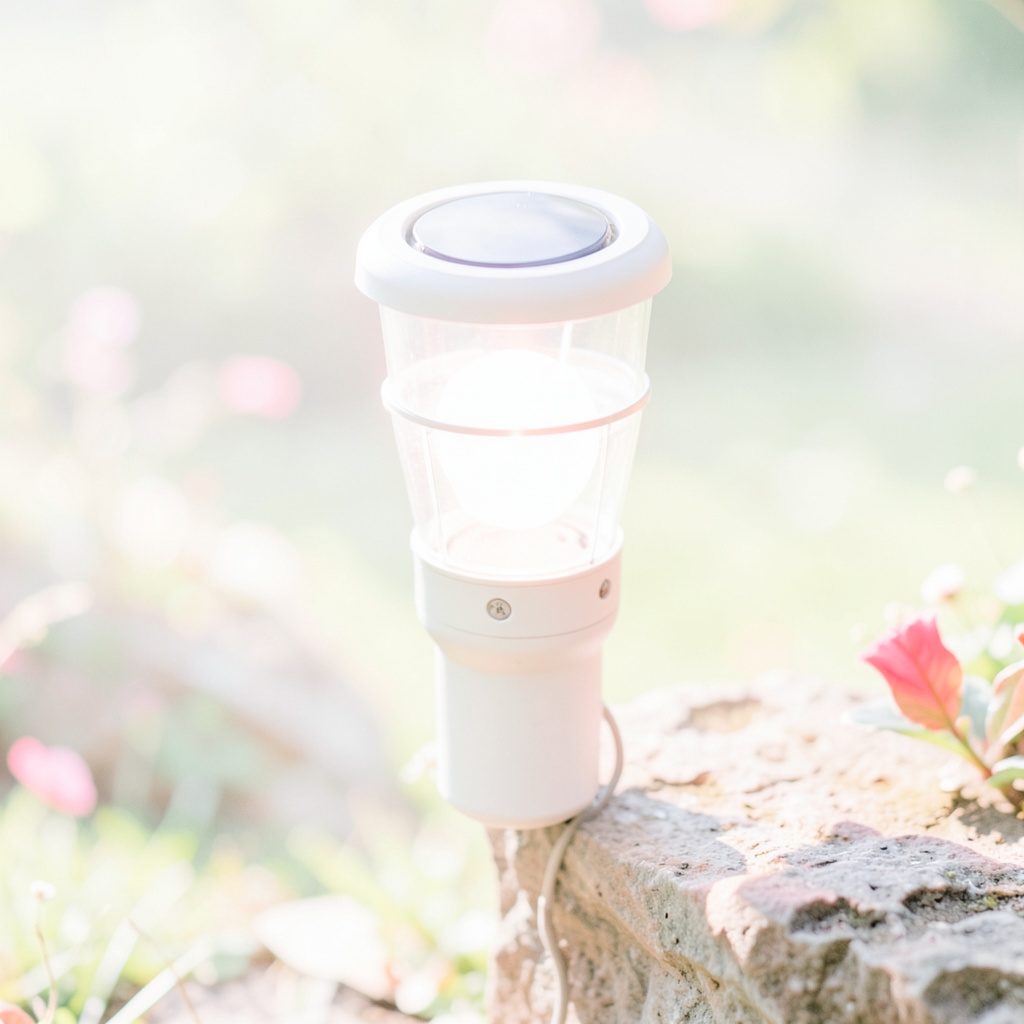
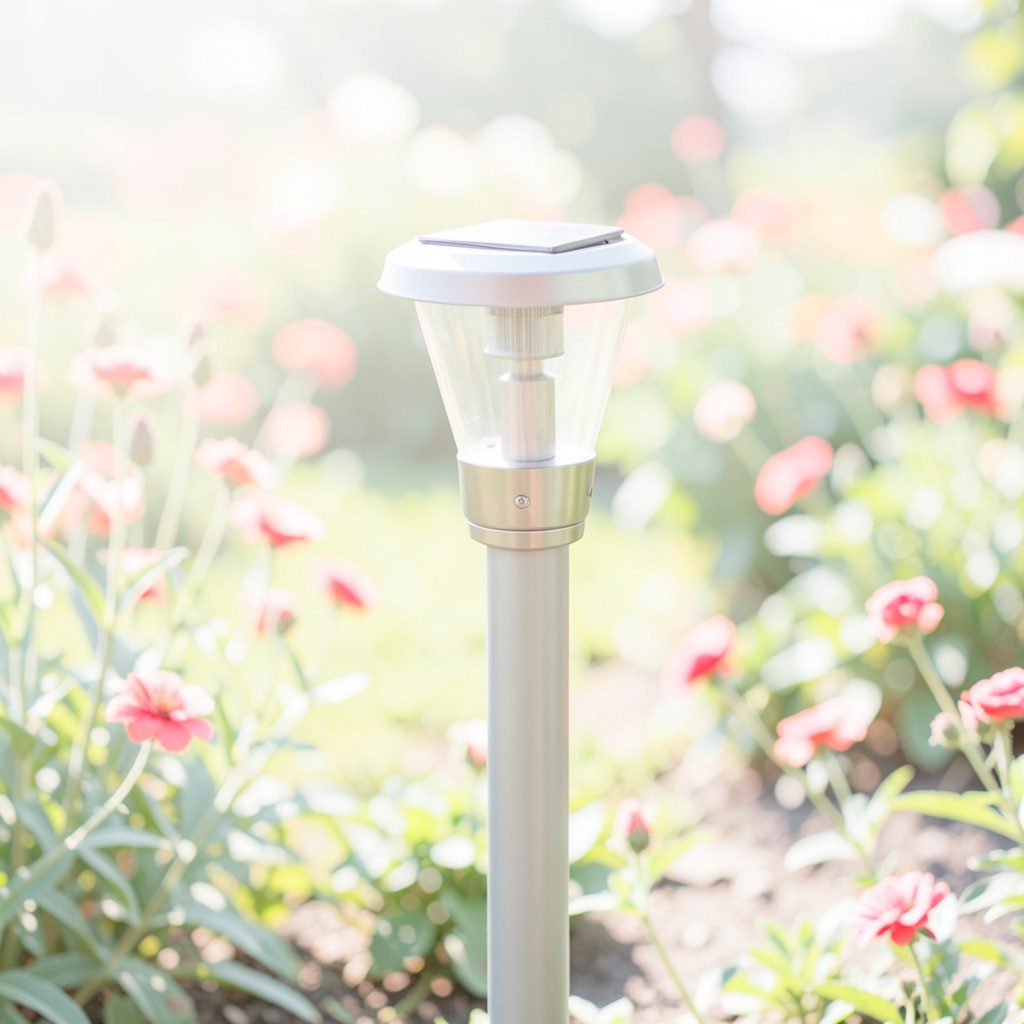
Solar lights are the simplest retrofit: the panel charges a battery during the day and the LED illuminates at dusk. They suit isolated paths, pots and garden beds in suburban Sydney or Perth, provided the panel receives several hours of direct sun. Compare battery capacity, panel size, brightness modes and the manufacturer’s stated runtime, because “up to” figures often assume a low setting or ideal conditions.
For dependable all-night lighting, 230-volt mains LED fittings or low-voltage landscape systems are usually stronger. Philips outdoor ranges can suit app-based schedules and scene control, while InnoGear products are commonly explored for solar path lights, spotlights and solar wall units. Availability changes across Amazon.com.au, Bunnings and other Australian sellers; Home Depot listings can be useful for specification comparisons, but local voltage and stock still need checking. Use a garden lighting budget to compare complete systems rather than judging by fixture price alone.
Build for Australian weather and electrical conditions
Australian conditions make enclosure and weather resistance decisive. Look for an IP rating suited to the position: at least IP44 for sheltered spots, IP55 where fixtures may be hosed, and IP65 or higher for exposed gardens near pools. Melbourne’s rain, Brisbane’s humidity, Sydney’s salt-laden coastal air and the intense UV of an Australian summer can damage sealed fittings, fading plastics and corroding metal. A suitable rating is only part of the answer, since the entire lamp, seals and cable entries must hold up together.
Mains installations must use compatible 230-volt, 50-hertz components and Australian Type I plugs or properly fitted hardwired connections. Outdoor sockets should be protected by a residual current device, while permanent fixed wiring may need a licensed electrician. Do not trail extension leads through wet grass or bury garden cable without the correct conduit and depth. When a fitting is close to a pool, follow the separation requirements in the manufacturer’s installation manual and have the final setup checked by a qualified installer.
Connected lights also involve data and account decisions. Before enabling phone notifications or location-based scheduling, compare the manufacturer’s privacy terms, including Meredith’s privacy details, and check whether routines continue if the internet drops. Local programming is useful in areas with patchy mobile coverage around the garden; a physical override is valuable for deliveries, parties and early departures. Store the app password securely and update the controller firmware before relying on it for unattended security.
Plan schedules around the garden day
Set schedules around daylight rather than a fixed clock whenever possible. Sunset and dusk shift noticeably across Australian latitudes and seasons: Brisbane stays light later than Melbourne in winter, while a fixed 6 p.m. activation can leave lights burning too early. Photocell models or astronomy-capable controllers adjust to local darkness. Use approximate sunset times only as a fallback, and test the boundary between dusk and full darkness so the garden does not switch on while still visibly bright.
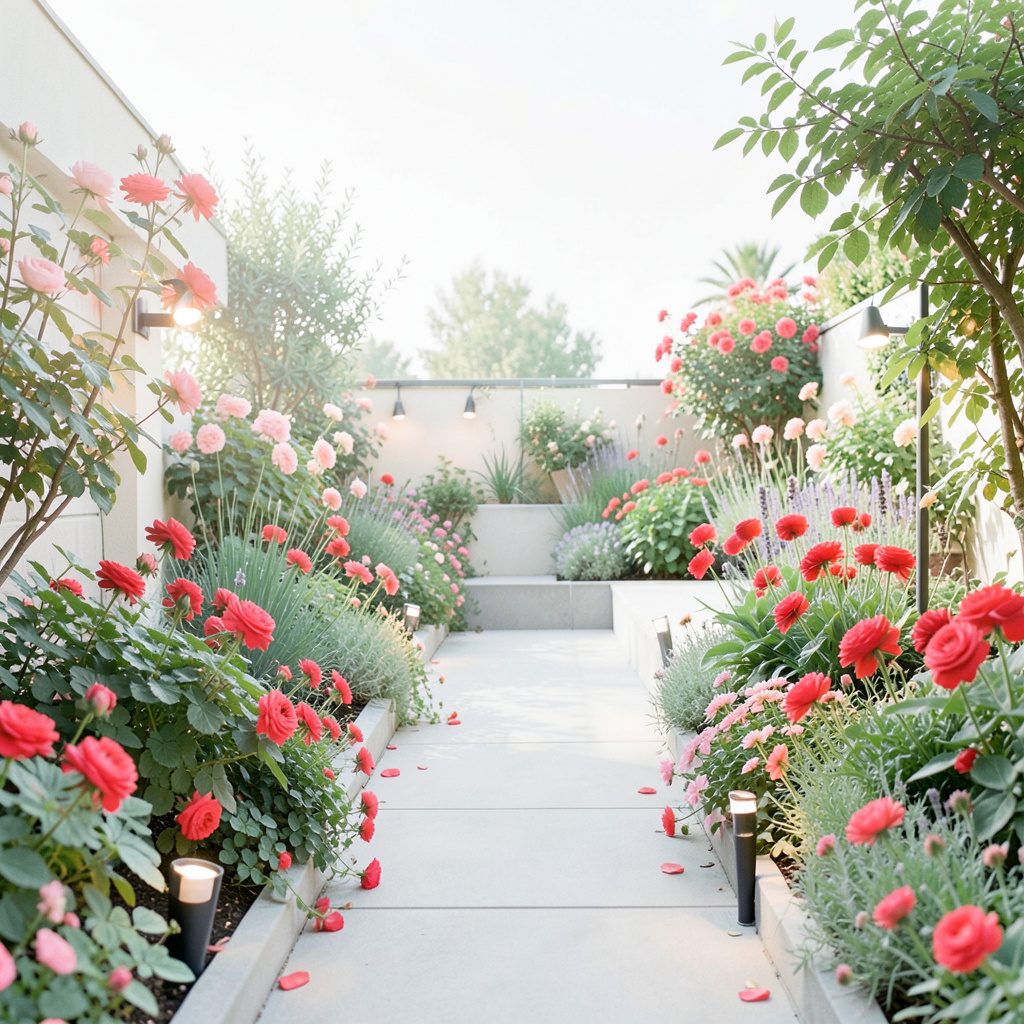
A practical plan divides the property by need: low path lighting may run from dusk until midnight, terrace lights can operate around dinner hours, and shielded security fixtures can cover the front approach all night. Motion-triggered lights reduce unnecessary glare and disturbance to neighbours. For broader placement ideas, the outdoor lighting design resource can help with spacing, beam direction and avoiding shadows. Keep fixtures aimed away from windows, check them after sunset, and label each schedule so an electrician or household member can understand it later.
Compare features, brands and running costs
Compare the specifications that affect daily performance: useful lumens, beam spread, LED colour temperature, IP rating, battery runtime, timer granularity, control range and warranty. Warm light around 2200–2700 kelvin usually feels comfortable for terraces, while a brighter neutral tone may be more useful for steps or security. Check whether a product dims before its photocell switches it off, whether schedules can be copied across multiple lights, and whether replacement parts or whole units are available locally.
Brand choice should follow the control requirement. Philips is a logical option for connected ecosystems and flexible programming; InnoGear is worth comparing for solar-powered outdoor fixtures and straightforward timer controls. On Amazon.com.au, verify the actual seller, delivery date, voltage, customer reviews and return terms. Home Depot product pages can help with feature comparisons, while a Bunnings or authorised Australian dealer may offer simpler advice and after-sales support. A higher purchase price can be justified by replaceable components, stronger seals and local warranty service.
Cost should be assessed over several seasons, not just at checkout. Solar models need battery replacement or panel attention, smart systems may require a hub or stable Wi-Fi, and low-voltage installations need cable, transformer fittings and professional labour. Entry-level solar lights suit decorative accents; quality mains LEDs work best for security and frequent use. If the lights are also intended for an intimate dinner outside, warm downward beams can frame a garden date night without creating harsh shadows or exposing the whole property.
Start with one circuit or group of lights rather than replacing everything at once. List the hours each area needs illumination, note whether it needs continuous guidance, timed entertaining or movement-triggered security, then remove fixtures that duplicate another beam. Test brightness after full dark and walk the route from the gate to the back door to identify dark patches and glare.
Your next step is to record sunset, choose one photocell path light and one programmable terrace fitting, then label their schedules.