Featured Topics

Solar lanterns with flickering flames: an Australian buyer’s guide
Solar lanterns with a flickering flame effect bring a warm, living glow to patios, paths and terraces without the heat or fuel of a candle. Their moving amber light resembles a small fire, making them effective for evening dining, garden gatherings and quiet entryways where conventional spotlights can feel harsh.
Choosing between these decorative lights requires comparing more than their appearance. Australian buyers should assess light output, battery storage, solar exposure, weather resistance and warranty support. Regional conditions—from Melbourne’s changeable skies to Brisbane’s intense summer heat—can have a greater effect on performance than the photograph on a product page suggests.
How a flame effect is created
Most faux-flame lanterns use one or more warm-white LEDs behind an amber or translucent diffuser. A programmed electronics module varies the brightness in irregular pulses, creating the impression of a wavering candle rather than a lamp that fades evenly.
The diffuser has a major influence on the result. Patterned panels can break the light into moving shapes, while smooth covers produce a softer amber glow. A lantern advertised with a flame simulation may show steady light until dusk and begin flickering only after its light sensor activates.
Some models add timers, remote controls or adjustable colour temperatures. These features can be useful, although a simple automatic lantern often provides the most reliable everyday operation. Check whether the simulated movement continues at the lowest brightness setting and whether it looks natural through the front and side panels.
Choosing brightness for each outdoor area
Brightness should match the lantern’s purpose. A small decorative model producing around 20–50 lumens is suited to table height, potted plants and short path segments. Brighter options can illuminate a wider patio or mark a garden entrance, but excess output may flatten the delicate flame-like movement.
Useful light from a decorative lantern is different from security lighting. Australian homeowners often want a welcoming route between the back gate, outdoor kitchen or pool area rather than enough illumination for detailed work. Spacing lights roughly one to two metres apart usually creates a coherent visual guide without creating a tunnel of glare.
A lantern can also look weak beneath an awning while appearing bright from the street. For patios, compare the listed lumens with equivalent LED bulbs and look for independent reviews taken at night. When combining decorative lights with task or security equipment, reviewing outdoor lighting ideas can help maintain a consistent visual scheme.
Solar panels and battery life
Solar performance depends on the relationship between panel size, battery capacity and energy use. A larger photovoltaic panel can recharge a higher-capacity battery, but only if it receives unobstructed sunlight. The stated runtime matters because many listings quote several hours at reduced brightness rather than a full night at maximum output.
In Australia, panel orientation deserves particular attention. A north-facing panel generally receives the most consistent year-round sunlight in the Southern Hemisphere. East- and west-facing alternatives may produce useful charging in the morning or afternoon, although shaded trees and roof overhangs can reduce the gain. The lantern itself can sit under cover while its panel remains in open sky, provided the sensor is not fooled by nearby illumination.
Heat and winter sunshine affect results differently. Brisbane summers may shorten battery life through heat stress, while Hobart and Melbourne gardens receive fewer usable winter daylight hours. A panel positioned beneath a tree canopy can struggle even if the battery and lantern are of good quality, so local shading should be considered before choosing a model.
Placement for paths, patios and lawns
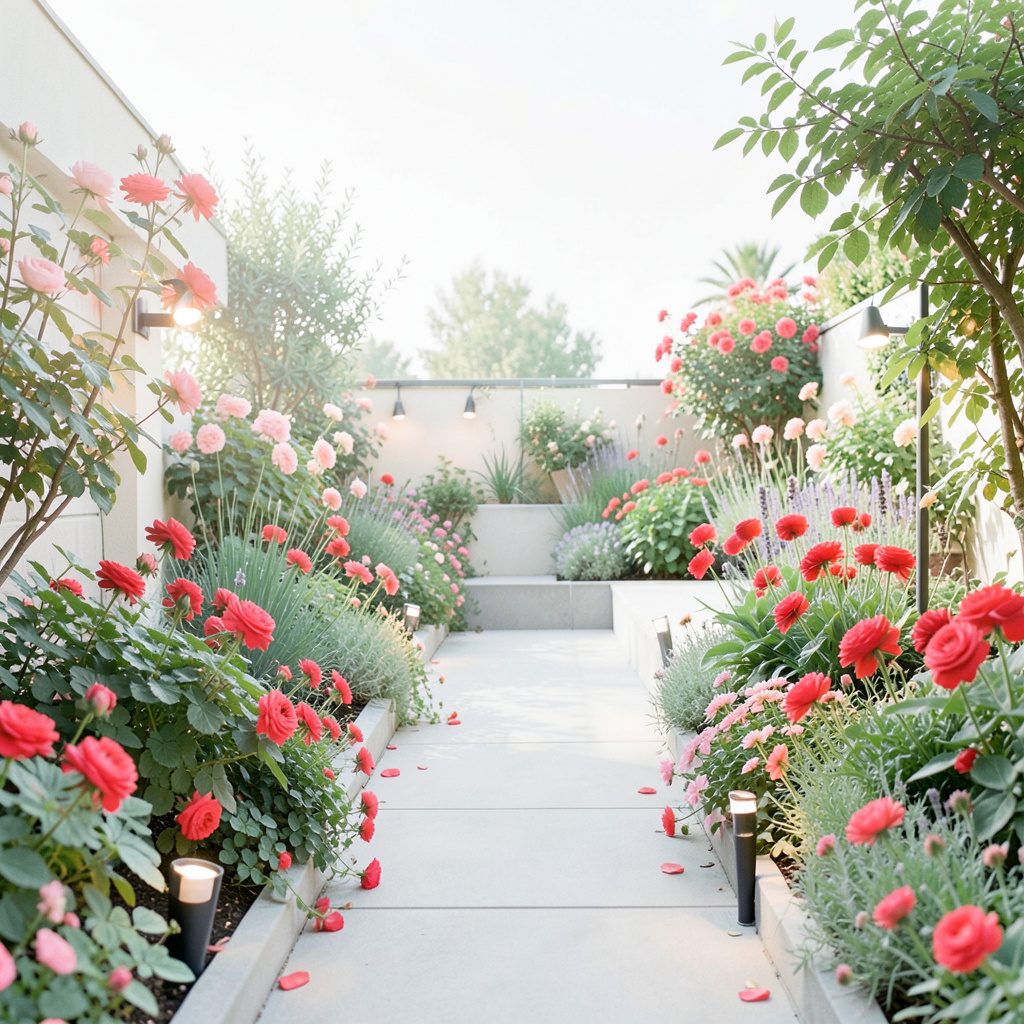
Along paths, place lanterns where their light falls below eye level or behind low planting. This reduces glare for drivers, cyclists and pedestrians while still making the route visible. In a small urban garden, several modest lanterns can provide more atmosphere than one powerful unit positioned beside a busy boundary fence.
For patios and outdoor kitchens, table lamps work well on low tables, ledges and sturdy garden furniture. The solar panel needs a stable, exposed position, while the lantern should sit where its amber glow will reflect from walls or paving. A Brisbane barbecue terrace may benefit from warm, lower-level lighting that remains comfortable during long summer evenings.
Lawns and terraces offer more flexibility. Solar lanterns can outline a curved border, emphasize a sculptural plant or gather around a fire pit without real flames. Keep the panel clear of irrigation spray, check that the base is stable in wind and avoid cords or trip hazards. A lantern intended to illuminate a driveway should not be treated as a substitute for purpose-built, Australian-compliant security lighting.
Weatherproofing and Australian safety
Look for a clearly stated ingress protection rating. IP44 indicates protection against splashing water, while IP65 generally offers greater protection against dust and powerful water jets. Neither rating normally means the lantern can be submerged. Ratings also say little about resistance to long exposure, strong sunlight or salt unless the manufacturer addresses those conditions separately.
Sydney’s salt-laden coastal air can corrode exposed metal, and Melbourne or Perth gardens may experience wind-driven rain that reaches a lantern from an unexpected angle. Rinse suitable coastal models with fresh water and dry the housing occasionally. In bushfire-prone districts, keep lanterns away from dry mulch and combustible vegetation, and follow local fire restrictions for any product involving a genuine flame or fuel.
Australian Consumer Law guarantees generally apply to goods sold by businesses that target Australian consumers, including guarantees of acceptable quality and conformity to the description. A battery-powered solar lantern may not require an RCM-registered adaptor, but any supplied mains charger should carry appropriate Australian certification. The supplier remains responsible for supporting repair, replacement or refund claims where a statutory guarantee applies.
Brands, retailers and seller checks
Brands such as Philips and InnoGear have strong outdoor-lighting credentials, but brand names do not guarantee that every model includes a faux-flame mode. Compare the exact product identifier, lumen rating, panel specification, battery capacity and water-resistance rating. A Philips lantern may fit an existing connected-lighting setup, while an InnoGear option may provide a simpler standalone installation.
Amazon.com.au can provide convenient local delivery, but a listing may be sold by a third-party merchant. Home Depot marketplace stock may be located outside Australia and have different return arrangements. Compare the final Australian dollar price, delivery charges, GST treatment and expected delivery date rather than relying on the headline discount. Local garden centres and electrical retailers can also be useful when a product must be returned before an event.
Customer reviews are most valuable when they mention realistic runtimes, charging after cloudy days, brightness and water exposure. Filter out reviews that discuss a different model or an earlier version. Before creating an account or providing personal information through a lighting retailer, check its privacy details and confirm how order and contact data will be handled.
A practical pre-purchase checklist
Begin with the effect itself. Confirm that the lantern has an animated amber glow rather than simply a warm-white bulb, and check whether photographs show the product operating in darkness. Next, consider the panel and battery as a matched system rather than judging either component in isolation.
Prioritise features that affect daily use: automatic dusk operation, a replaceable or rechargeable battery, a stable base and a credible IP rating. In regions with strong summer sun, dark panel housings and ventilation around the battery compartment can be valuable. A local warranty and accessible spare parts may matter more than Bluetooth control or decorative colour options.
The most dependable choice combines a clearly specified flame simulation, a suitably sized solar panel and battery, credible weather resistance and local warranty support, with the panel positioned to receive direct sun while the lantern remains safely placed where its glow will be enjoyed.