Featured Topics

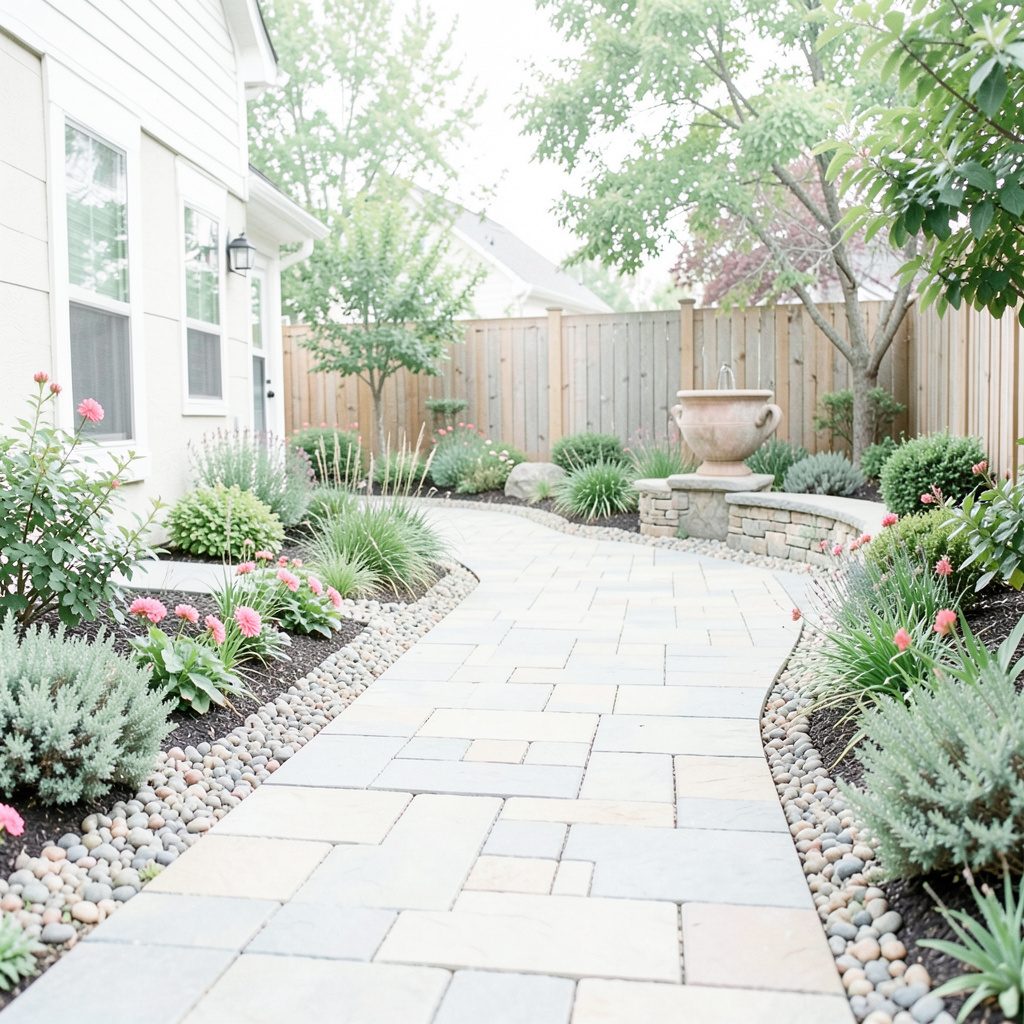
Make your garden feel bigger with clever uplighting
When the sun drops behind the hills and the evening air settles in, the right lighting can completely transform how a garden feels. Uplighting is one of the most effective techniques for making outdoor spaces appear larger than they really are, drawing the eye upward and outward, away from the boundaries of your block.
Australian homes often come with compact outdoor areas, whether it's a narrow courtyard in Sydney's Inner West, a townhouse patio in Brisbane, or a small suburban yard in Perth. Making these spaces feel generous without extending the footprint is where a thoughtful lighting plan earns its keep. Aussies love their backyards as the social hub, and lighting plays a huge role past sundown, particularly during those long arvos entertaining mates.
This guide walks through the principles, products, and placements that lift an ordinary yard into something distinctly expansive. You'll find pointers on local retailers like Beacon Lighting and Bunnings, the fixtures worth your hard-earned dollars, and the mistakes that shrink rather than stretch a space. For a bit of background on who put this together, head to the about the author page.
Why vertical light tricks the eye
Human eyes use size cues to judge distance. When you illuminate a tall object from below, your brain reads it as further away. Pointing spotlights upward at a eucalyptus trunk or a rendered brick wall forces the gaze up, away from the patio floor. The result is a garden that feels taller and deeper than its actual square metreage.
Shadows matter as much as the light itself. A well-placed uplight throws the silhouette of leaves across a rendered wall, adding texture flat lighting cannot match. This layering matters in compact courtyards where every square metre is on show, and homeowners who entertain lean into the effect, knowing a richly textured backdrop does the work of a much larger renovation.
Contrast between bright focal points and darker zones creates the sense of depth. Your eye reads bright surfaces as foreground and dimmer zones as background. In practice, a few well-aimed beams do more for perceived spaciousness than a dozen downlights.
Picking the right uplights for the job
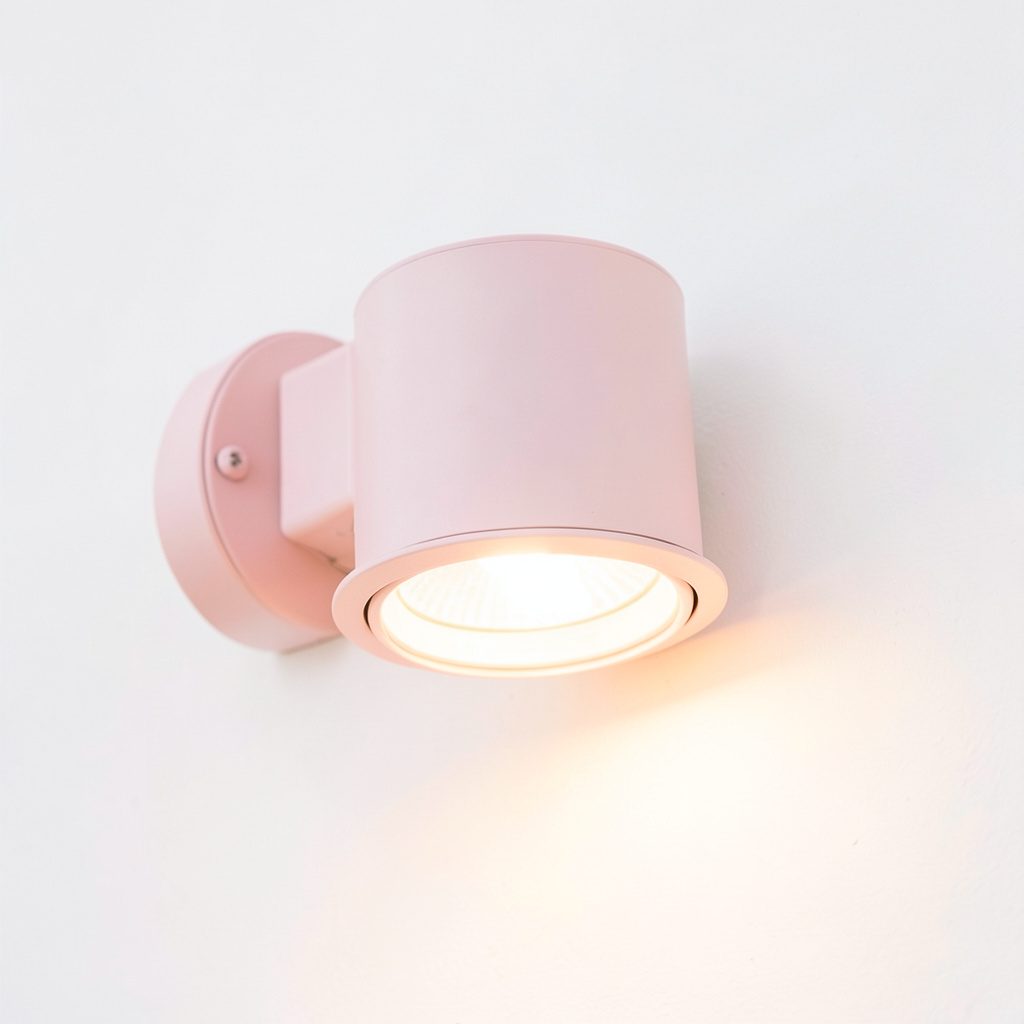
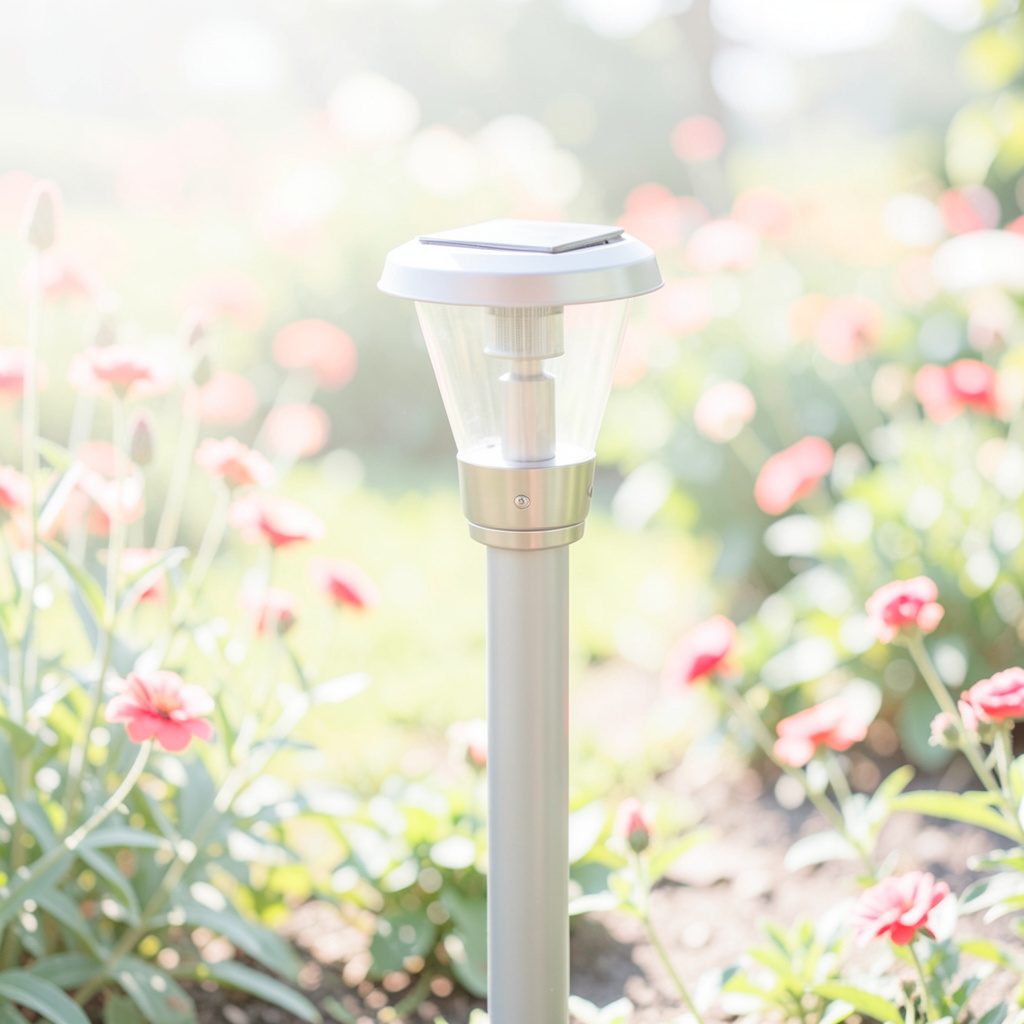
Spike-mounted spotlights are the workhorse of garden uplighting and are widely available at Bunnings Warehouse, Beacon Lighting, and online retailers. Look for adjustable heads and bodies rated at least IP65 to handle coastal salt spray, summer storms, and the rogue sprinkler. Solid brass or marine-grade stainless outlasts plastic fittings, particularly on the Sunshine Coast or Mornington Peninsula.
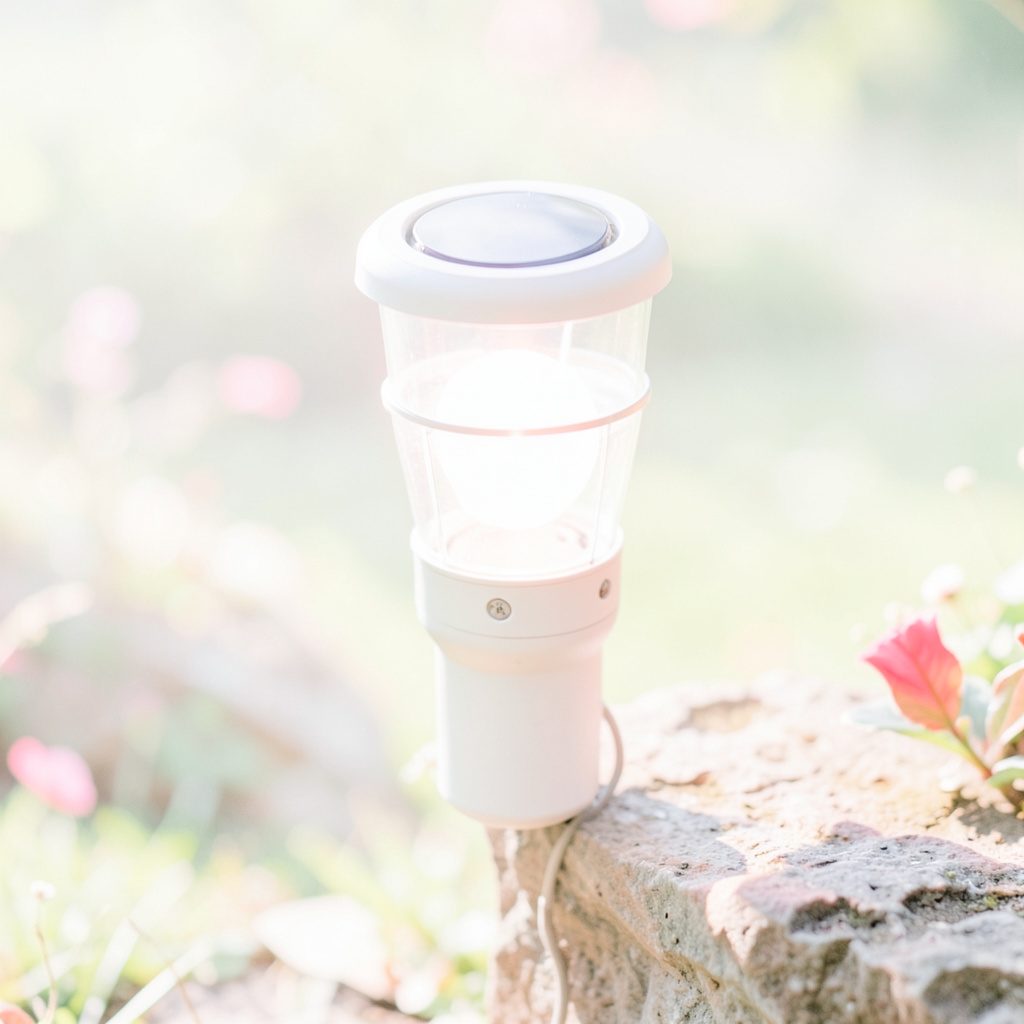
For a softer wash, consider a wide-beam floodlight aimed at a feature wall or tall screening plant. Brands like Philips and Havit offer adjustable beam angles. Solar-powered spike lights have improved in recent years, though you'll want a panel that gets decent midday sun. Shaded courtyards are better served by low-voltage wired fittings fed from a small transformer.
Bollard-style uplights are worth a thought, particularly along the edges of a lawn. Modern designs from Domayne and Beacon Lighting offer sleek profiles that disappear into garden beds during the day. Match the colour temperature across fixtures to keep the yard feeling cohesive.
Strategic placement near trees and walls
The classic move is a spike light at the base of a feature tree, aimed into the canopy. Mature gums, jacarandas, and weeping figs respond beautifully to this treatment, their bark and leaf structure creating natural patterns of light and shade. For very tall trees, you may need a higher-output fixture or a narrow-beam model.
Walls, fences, and rendered surfaces are equally powerful canvases. Aim an uplight at a brick or stone feature wall from about a metre back, adjusting the angle until the texture is emphasised. In a typical suburban yard, this single adjustment can make a six-metre boundary feel like the side of a heritage terrace. Two or three wall lights deliver more impact than a dozen path lights.
Architectural features such as pergola posts, water tanks, or rendered columns can play the role of vertical anchors. Where space is tight, combine downlighting from a pergola with uplighting from the ground. The interplay creates the impression of a deeper, more generous garden.
Colour temperature and mood
Warm white light, somewhere between 2200K and 2700K, tends to make outdoor spaces feel inviting, which is what most Aussie homeowners want from a relaxed evening that runs into the night. Cooler whites can feel clinical and tend to shrink perceived size because they reveal every boundary line. Stick to a single warm tone across all uplights.
Coloured uplighting has its place, particularly for special occasions, but used too often it can flatten the depth effect. Reserve RGB or colour-changing fixtures for accent moments and keep the bulk of your uplighting on a steady warm white. Consistency of tone matters more than the occasional burst of colour.
For homeowners who entertain regularly, smart controllers from brands including Philips Hue can shift scenes throughout the evening without touching a switch. A relaxed warm scene for a quiet weeknight can shift to a brighter scene when the mates arrive.
Layering with path and step lights
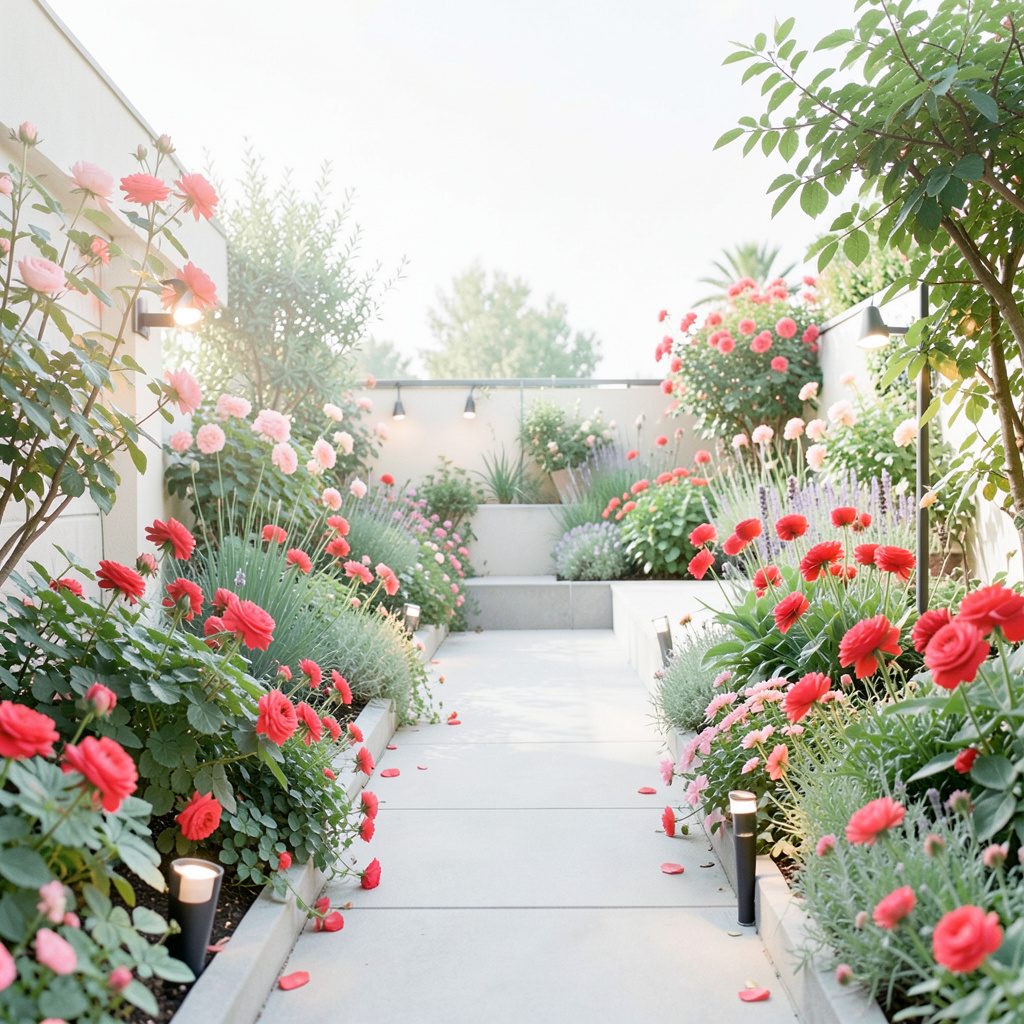
Uplighting does the heavy lifting for perceived size, but a thoughtful layer of low path and step lighting gives the eye somewhere to travel. Without it, the gaze has nothing to lead it beyond the patio. A discreet row of path lights along a winding edge, or recessed step lights in a timber deck, creates implied depth that invites the eye deeper into the yard.
In a narrow courtyard, a single line of path lights along a side border can double the apparent width, particularly when paired with uplighting on the opposite wall. Keep path lights low and warm so they suggest a route without competing with the vertical beams. Many Bunnings and Beacon Lighting path fixtures will sit comfortably with mains-fed uplights on a single transformer.
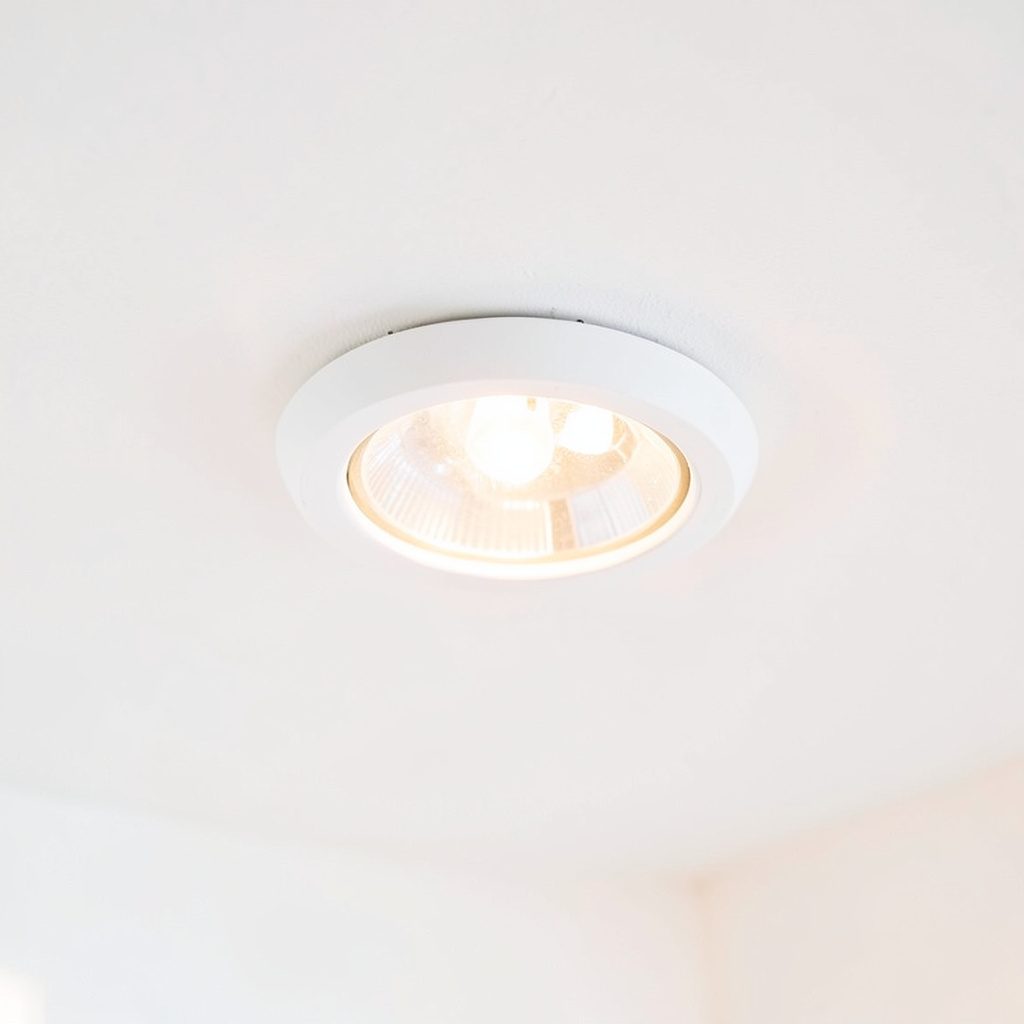
For decks and steps, consider mini recessed LEDs that sit flush with the timber. They mark the way without adding visual clutter. Keep the spacing around a metre apart, and let the eye follow the line into the more shadowy parts of the garden.
Solar, LED, and low-voltage choices
Modern LED uplights sip power and last for years, a win for the energy-conscious Australian household. A 5-watt LED floods out the same light as an old 50-watt halogen and runs cool enough to be safe around mulch and dry leaf litter. Look for fittings with a lumen output that suits the job: roughly 200 to 400 lumens for accent uplighting, 600 to 1000 lumens for tree trunks and walls.
Solar uplights have come of age, and brands such as InnoGear offer kits that hold up to the harsh UV and summer heat common across the country. Position the solar panel where it gets at least four to six hours of direct sun. In shaded courtyards, or in Hobart where winter daylight is shorter, low-voltage wired systems are often the more practical answer.
Mains-fed uplighting should always be installed by a licensed electrician, particularly with the wiring rules that apply to outdoor circuits in Australia. For anyone chasing a single point of contact, the team at EPI-Light designs outdoor lighting systems that hold up to the local climate and Australian standards.
Mistakes that shrink instead of stretch
The most common error is over-lighting. When every surface is bright, there are no shadows, and the garden flattens into a single plane that exposes the actual size of the yard. Step back, look at the lit scene from where you usually sit, and switch off any fitting that doesn't add real value. A few well-chosen beams always outperform a dozen middling ones.
Another common slip is aiming lights straight up into open sky, where the beam simply disappears and creates glare without adding depth. Always check the beam lands on something solid: a trunk, a wall, a canopy, a feature column. Glare in the seating area is the fastest way to make a garden feel smaller.
Don't forget maintenance. Lenses get grimy, seals perish in the harsh Aussie sun, and spiders set up home inside fittings. A quick wipe-down each season and an occasional check of cable connections keeps the system performing. Many homeowners set this task for the long Easter weekend.
The same publisher also covers off-the-clock lifestyle picks like Australian pokies and craps spin for those quiet evenings once the garden's done its job. The practical takeaway from all of this is straightforward: pick two or three key vertical features, light them warmly from below, and let the rest of the garden fall into shadow. A handful of well-chosen uplights, aimed with care and chosen to suit Australian weather, will do more for the perceived size of your yard than most major landscaping projects.